The Smart Home Revolution
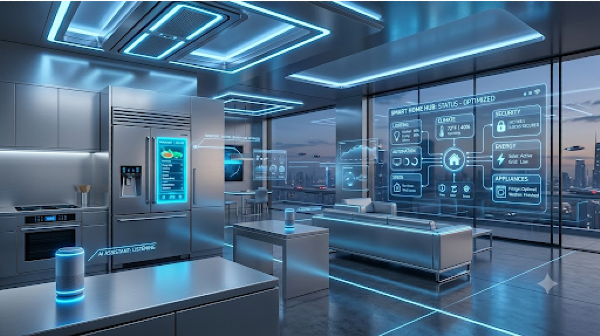
Smart home technology is fundamentally transforming the appliances segment of the furnishings, fixtures, and appliances industry. The proliferation of Internet of Things (IoT) connectivity, voice assistants, and app-based controls has created a new product category that commands premium pricing, drives replacement cycles, and opens recurring revenue opportunities through software and service subscriptions. For investors, understanding the smart home trend is essential to identifying the next wave of sector outperformers.
Market Size and Growth Trajectory
The global smart home market is projected to exceed $500 billion by 2030, growing at a compound annual rate above 25%. Smart appliances — including refrigerators, washers, ovens, HVAC systems, and dishwashers with IoT connectivity — represent the fastest-growing subsegment. Consumer adoption is accelerating driven by falling sensor costs, expanding 5G coverage, and the growing ecosystem of compatible smart home platforms including Amazon Alexa, Google Home, and Apple HomeKit.
Competitive Dynamics Among Appliance Makers
Global Giants Investing in Connectivity
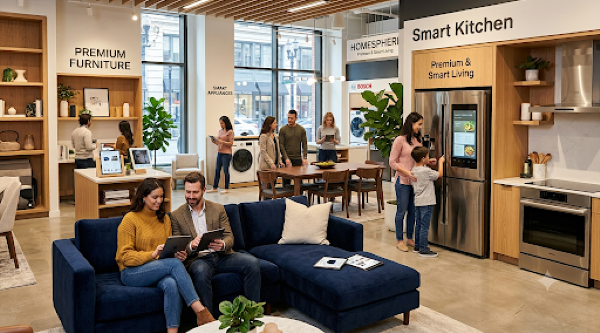
Companies like Samsung, LG, Whirlpool, and Bosch are making major R&D investments in smart appliance platforms. Samsung's SmartThings ecosystem and LG's ThinQ platform represent billions in technology investment aimed at capturing recurring software and service revenue alongside hardware sales. These platforms create ecosystem lock-in, reducing customer churn and raising switching costs.
Emerging Competition from Tech Companies
Technology companies including Amazon (Astro robot), Google (Nest), and Apple (HomeKit) are increasingly competing in adjacent home product categories. Their deep software expertise and existing consumer ecosystems represent competitive threats to traditional appliance manufacturers that cannot match their software development capabilities.
Revenue Model Transformation
Smart appliances shift the revenue model from one-time hardware sales toward recurring software subscriptions, premium service plans, and data monetization. Companies that successfully build platform ecosystems can generate annuity-like recurring revenue streams that smooth out the cyclicality inherent in traditional appliance sales. This business model transformation could fundamentally improve the valuation multiple investors assign to leading smart appliance manufacturers.
Conclusion
Smart home technology represents the most transformative trend in the appliances sector. Companies that successfully integrate IoT connectivity, build compelling platform ecosystems, and capitalize on premium pricing for smart products are positioned to outperform their traditional counterparts. Investors should assess each company's smart home strategy as a critical component of long-term competitive positioning analysis.


















The Smart Home Revolution
Smart home technology is fundamentally transforming the appliances segment of the furnishings, fixtures, and appliances industry. The proliferation of Internet of Things (IoT) connectivity, voice assistants, and app-based controls has created a new product category that commands premium pricing, drives replacement cycles, and opens recurring revenue opportunities through software and service subscriptions. For investors, understanding the smart home trend is essential to identifying the next wave of sector outperformers.
Market Size and Growth Trajectory
The global smart home market is projected to exceed $500 billion by 2030, growing at a compound annual rate above 25%. Smart appliances — including refrigerators, washers, ovens, HVAC systems, and dishwashers with IoT connectivity — represent the fastest-growing subsegment. Consumer adoption is accelerating driven by falling sensor costs, expanding 5G coverage, and the growing ecosystem of compatible smart home platforms including Amazon Alexa, Google Home, and Apple HomeKit.
Competitive Dynamics Among Appliance Makers
Global Giants Investing in Connectivity
Companies like Samsung, LG, Whirlpool, and Bosch are making major R&D investments in smart appliance platforms. Samsung's SmartThings ecosystem and LG's ThinQ platform represent billions in technology investment aimed at capturing recurring software and service revenue alongside hardware sales. These platforms create ecosystem lock-in, reducing customer churn and raising switching costs.
Emerging Competition from Tech Companies
Technology companies including Amazon (Astro robot), Google (Nest), and Apple (HomeKit) are increasingly competing in adjacent home product categories. Their deep software expertise and existing consumer ecosystems represent competitive threats to traditional appliance manufacturers that cannot match their software development capabilities.
Revenue Model Transformation
Smart appliances shift the revenue model from one-time hardware sales toward recurring software subscriptions, premium service plans, and data monetization. Companies that successfully build platform ecosystems can generate annuity-like recurring revenue streams that smooth out the cyclicality inherent in traditional appliance sales. This business model transformation could fundamentally improve the valuation multiple investors assign to leading smart appliance manufacturers.
Conclusion
Smart home technology represents the most transformative trend in the appliances sector. Companies that successfully integrate IoT connectivity, build compelling platform ecosystems, and capitalize on premium pricing for smart products are positioned to outperform their traditional counterparts. Investors should assess each company's smart home strategy as a critical component of long-term competitive positioning analysis.