Last updated on July 28th 2026 by Noah Brody
🌎 Global leisure leaders combine powerful brands with worldwide scale
Companies such as Disney, Marriott, Booking Holdings, and Nike have built dominant positions through global reach, trusted brands, and business models that become stronger as they grow. Their scale creates advantages in marketing, customer loyalty, and operational efficiency.
🏰 Intellectual property and loyalty ecosystems create powerful competitive advantages
Disney's entertainment franchises, Marriott's Bonvoy loyalty program, and Booking Holdings' travel platforms demonstrate how valuable customer relationships and unique assets can create long-term advantages that competitors struggle to replicate.
🚀 International expansion remains a major growth opportunity for leisure companies
The continued growth of emerging-market middle classes is creating new demand for travel, entertainment, hospitality, and recreation. Companies with established global infrastructure are positioned to benefit from decades of rising leisure participation worldwide.
📈 Investors should focus on business quality, not just industry growth
The strongest leisure investments combine durable competitive advantages, strong cash generation, pricing power, and management teams capable of expanding their market positions over time. Industry growth alone does not guarantee superior shareholder returns.
Global Leaders in the Leisure Industry
Why Do Global Leisure Leaders Matter to Investors?
The global leisure industry is shaped by a handful of dominant companies whose scale, brand recognition, and operational excellence have allowed them to establish commanding positions across their respective markets. Understanding who these global leaders are, what makes them dominant, and where their growth trajectories are heading provides investors with the foundation for building a sophisticated global leisure portfolio.
Why Is Disney Considered the Ultimate Leisure Conglomerate?
Walt Disney Company stands alone as the world's most comprehensive leisure conglomerate. Its operations span theme parks on four continents, streaming services serving hundreds of millions of subscribers worldwide, theatrical entertainment, television networks, consumer products, and cruise lines. Disney's competitive moat is built on intellectual property accumulated over nearly a century of storytelling, creating characters and franchises that transcend generations and cultures. From Mickey Mouse to Iron Man, from Cinderella to Baby Yoda, Disney's IP portfolio is the most valuable in entertainment history and creates economic advantages that no competitor has been able to replicate.
How Did Booking Holdings Become the Global Online Travel Leader?
Booking Holdings is the global leader in online travel. Its flagship platform, Booking.com, is the world's largest accommodation booking site, connecting millions of properties with travelers in every country. The company's European dominance and growing presence in Asia Pacific make it a genuine global business rather than a US-centric one. Its portfolio of complementary brands, including Priceline, Kayak, and OpenTable, gives it presence across the entire travel planning and booking journey.
Why Does Marriott Dominate Global Hospitality?
Marriott International leads the global hotel industry with a presence in nearly every country and territory on earth. Its portfolio of more than 30 brands serves travelers at every price point, from the budget-friendly Fairfield Inn to the ultra-luxurious St. Regis and Ritz-Carlton. Marriott's global loyalty program, Bonvoy, is the world's largest hotel rewards program, giving the company unmatched direct access to hundreds of millions of frequent travelers. Its expansion pipeline, the largest in the industry, ensures continued unit growth for years to come.
How Has Airbnb Reshaped the Global Hospitality Market?
Airbnb has emerged as one of the most disruptive forces in global hospitality since its founding less than two decades ago. By enabling homeowners to monetize their properties and giving travelers access to a radically broader range of accommodation options than traditional hotels could provide, Airbnb permanently altered the competitive landscape of global lodging. Today its platform hosts millions of listings across virtually every country, from urban apartments to remote castles, and its experiences platform has begun extending its reach into activities and tours.
How Is Universal Studios Challenging Disney's Theme Park Dominance?
The Walt Disney Company's primary theme park competitor, Comcast's NBCUniversal, has been building a serious global theme park business. Universal Studios parks in Hollywood, Orlando, Osaka, Singapore, and planned expansion locations are increasingly competitive with Disney's offerings, winning critical acclaim for their immersive environments and innovative attraction technologies. The upcoming Epic Universe park in Orlando will be Universal's most ambitious project yet and is expected to shift competitive dynamics in the world's largest theme park market.
Why Is Las Vegas Sands a Global Gaming Leader?
Las Vegas Sands Corporation is the global leader in the integrated resort and high-end gaming market, with its flagship properties in Macau and Singapore generating some of the highest gaming revenues of any facilities in the world. As the Macau market continues its post-pandemic recovery and Singapore's Marina Bay Sands expands, Las Vegas Sands is positioned to benefit from the long-term growth of luxury gaming tourism in Asia.
Which Companies Lead Traditional Travel and Resort Markets?
Flight Centre Travel Group, TUI Group, and Club Med represent global leaders in traditional travel agency, tour operator, and all-inclusive resort markets respectively. These companies serve the mass-market travel segment with packaged products that combine transportation, accommodation, and experiences into convenient bundles that appeal to consumers seeking simplicity and value certainty in their travel planning.
Why Does Nike Remain a Global Sports and Recreation Leader?
Nike remains the world's undisputed leader in athletic footwear and apparel, with a global brand presence that transcends sports into culture and lifestyle. Its direct-to-consumer digital strategy, global endorser network, and manufacturing and supply chain scale give it competitive advantages that smaller rivals cannot match. As athletic participation continues to grow globally and the athleisure trend persists, Nike's market leadership position provides a durable foundation for continued growth across global markets for decades to come.
🚀 Expand Your Edge: Elite Leisure Industry Investment Intelligence
The leisure industry spans travel, entertainment, hospitality, gaming, sports, recreation, and experiential businesses that benefit from rising consumer spending and long-term demographic trends. Our Leisure Industry Investor Intelligence Hub brings together comprehensive research covering industry fundamentals, market-leading companies, macroeconomic drivers, financial analysis, emerging technologies, and future growth opportunities. Explore the curated resources below to build a deeper understanding of one of the market's most dynamic sectors.
🌎 Industry Fundamentals & Market Leaders
🎯 Leisure Industry Sectors & Investment Opportunities
📊 Financial Analysis & Portfolio Strategy
🤖 Technology, AI & Industry Innovation
🌍 Economic Trends & Market Drivers
⚠️ Risk Management & Smart Investing





















Last updated on July 28th 2026 by Noah Brody
🌎 Global leisure leaders combine powerful brands with worldwide scale
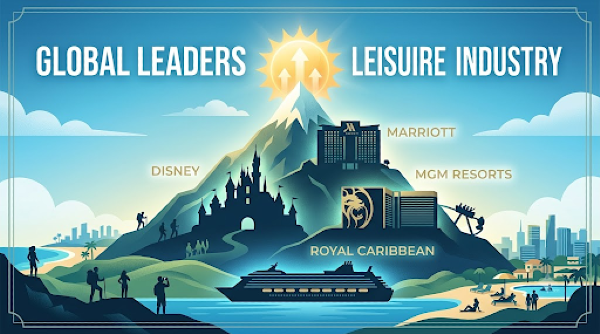
Companies such as Disney, Marriott, Booking Holdings, and Nike have built dominant positions through global reach, trusted brands, and business models that become stronger as they grow. Their scale creates advantages in marketing, customer loyalty, and operational efficiency.
🏰 Intellectual property and loyalty ecosystems create powerful competitive advantages
Disney's entertainment franchises, Marriott's Bonvoy loyalty program, and Booking Holdings' travel platforms demonstrate how valuable customer relationships and unique assets can create long-term advantages that competitors struggle to replicate.
🚀 International expansion remains a major growth opportunity for leisure companies
The continued growth of emerging-market middle classes is creating new demand for travel, entertainment, hospitality, and recreation. Companies with established global infrastructure are positioned to benefit from decades of rising leisure participation worldwide.
📈 Investors should focus on business quality, not just industry growth
The strongest leisure investments combine durable competitive advantages, strong cash generation, pricing power, and management teams capable of expanding their market positions over time. Industry growth alone does not guarantee superior shareholder returns.
Global Leaders in the Leisure Industry
Why Do Global Leisure Leaders Matter to Investors?
The global leisure industry is shaped by a handful of dominant companies whose scale, brand recognition, and operational excellence have allowed them to establish commanding positions across their respective markets. Understanding who these global leaders are, what makes them dominant, and where their growth trajectories are heading provides investors with the foundation for building a sophisticated global leisure portfolio.
Why Is Disney Considered the Ultimate Leisure Conglomerate?
Walt Disney Company stands alone as the world's most comprehensive leisure conglomerate. Its operations span theme parks on four continents, streaming services serving hundreds of millions of subscribers worldwide, theatrical entertainment, television networks, consumer products, and cruise lines. Disney's competitive moat is built on intellectual property accumulated over nearly a century of storytelling, creating characters and franchises that transcend generations and cultures. From Mickey Mouse to Iron Man, from Cinderella to Baby Yoda, Disney's IP portfolio is the most valuable in entertainment history and creates economic advantages that no competitor has been able to replicate.
How Did Booking Holdings Become the Global Online Travel Leader?
Booking Holdings is the global leader in online travel. Its flagship platform, Booking.com, is the world's largest accommodation booking site, connecting millions of properties with travelers in every country. The company's European dominance and growing presence in Asia Pacific make it a genuine global business rather than a US-centric one. Its portfolio of complementary brands, including Priceline, Kayak, and OpenTable, gives it presence across the entire travel planning and booking journey.
Why Does Marriott Dominate Global Hospitality?
Marriott International leads the global hotel industry with a presence in nearly every country and territory on earth. Its portfolio of more than 30 brands serves travelers at every price point, from the budget-friendly Fairfield Inn to the ultra-luxurious St. Regis and Ritz-Carlton. Marriott's global loyalty program, Bonvoy, is the world's largest hotel rewards program, giving the company unmatched direct access to hundreds of millions of frequent travelers. Its expansion pipeline, the largest in the industry, ensures continued unit growth for years to come.
How Has Airbnb Reshaped the Global Hospitality Market?
Airbnb has emerged as one of the most disruptive forces in global hospitality since its founding less than two decades ago. By enabling homeowners to monetize their properties and giving travelers access to a radically broader range of accommodation options than traditional hotels could provide, Airbnb permanently altered the competitive landscape of global lodging. Today its platform hosts millions of listings across virtually every country, from urban apartments to remote castles, and its experiences platform has begun extending its reach into activities and tours.
How Is Universal Studios Challenging Disney's Theme Park Dominance?
The Walt Disney Company's primary theme park competitor, Comcast's NBCUniversal, has been building a serious global theme park business. Universal Studios parks in Hollywood, Orlando, Osaka, Singapore, and planned expansion locations are increasingly competitive with Disney's offerings, winning critical acclaim for their immersive environments and innovative attraction technologies. The upcoming Epic Universe park in Orlando will be Universal's most ambitious project yet and is expected to shift competitive dynamics in the world's largest theme park market.
Why Is Las Vegas Sands a Global Gaming Leader?
Las Vegas Sands Corporation is the global leader in the integrated resort and high-end gaming market, with its flagship properties in Macau and Singapore generating some of the highest gaming revenues of any facilities in the world. As the Macau market continues its post-pandemic recovery and Singapore's Marina Bay Sands expands, Las Vegas Sands is positioned to benefit from the long-term growth of luxury gaming tourism in Asia.
Which Companies Lead Traditional Travel and Resort Markets?
Flight Centre Travel Group, TUI Group, and Club Med represent global leaders in traditional travel agency, tour operator, and all-inclusive resort markets respectively. These companies serve the mass-market travel segment with packaged products that combine transportation, accommodation, and experiences into convenient bundles that appeal to consumers seeking simplicity and value certainty in their travel planning.
Why Does Nike Remain a Global Sports and Recreation Leader?
Nike remains the world's undisputed leader in athletic footwear and apparel, with a global brand presence that transcends sports into culture and lifestyle. Its direct-to-consumer digital strategy, global endorser network, and manufacturing and supply chain scale give it competitive advantages that smaller rivals cannot match. As athletic participation continues to grow globally and the athleisure trend persists, Nike's market leadership position provides a durable foundation for continued growth across global markets for decades to come.
🚀 Expand Your Edge: Elite Leisure Industry Investment Intelligence
The leisure industry spans travel, entertainment, hospitality, gaming, sports, recreation, and experiential businesses that benefit from rising consumer spending and long-term demographic trends. Our Leisure Industry Investor Intelligence Hub brings together comprehensive research covering industry fundamentals, market-leading companies, macroeconomic drivers, financial analysis, emerging technologies, and future growth opportunities. Explore the curated resources below to build a deeper understanding of one of the market's most dynamic sectors.
🌎 Industry Fundamentals & Market Leaders
🎯 Leisure Industry Sectors & Investment Opportunities
📊 Financial Analysis & Portfolio Strategy
🤖 Technology, AI & Industry Innovation
🌍 Economic Trends & Market Drivers
⚠️ Risk Management & Smart Investing