Building a portfolio of consumer discretionary stocks can help investors grow their wealth over time. These companies sell non‑essential goods and services, such as clothing, travel, entertainment, and luxury items. Their performance rises and falls with consumer spending, so choosing the right mix is important. This guide walks through how to build a balanced and thoughtful portfolio in this sector.
Understanding the Consumer Discretionary Sector
Read More: What are Consumer Discretionary Stocks?
Consumer discretionary stocks come from businesses that depend on shoppers having extra money to spend. When the economy is strong, these companies often grow quickly. When times are tough, sales can slow down. This makes the sector more sensitive to economic cycles than others.
Common sub‑sectors include retail, e‑commerce, travel, leisure, restaurants, and luxury goods. Well‑known examples include Amazon (AMZN), Nike (NKE), and Starbucks (SBUX. Each sub‑sector reacts differently to changes in consumer behavior.
Understanding how these companies make money helps investors decide which ones fit their goals. Some focus on brand loyalty. Others rely on global expansion or digital sales. A strong portfolio blends different types of companies to reduce risk.
Read More: The Top Consumer Discretionary Stocks Ranked by our Investment Community
Step 1: Define Your Investment Goals
Before choosing stocks, investors should think about their goals. Some want long‑term growth. Others want steady income. Consumer discretionary stocks usually fit best in growth‑focused portfolios because they can rise quickly during strong economic periods.
Short‑term traders may look for fast gains, but long‑term investors focus on steady performance over many years. Knowing your goals helps you decide how much risk you can handle.
Step 2: Decide Your Allocation Percentage
Most investors keep consumer discretionary stocks at about 10–20% of their total portfolio. This keeps risk under control while still allowing room for growth. The rest of the portfolio often includes more stable sectors like consumer staples, healthcare, or utilities.
Younger investors may choose a higher allocation because they have more time to recover from downturns. Older investors often prefer a smaller allocation to reduce volatility. The right percentage depends on your age, goals, and comfort with risk.
Table: Sample Allocation by Risk Level
| Risk Level |
Discretionary Allocation |
Notes |
| Conservative |
5–10% |
Focus on stability |
| Moderate |
10–20% |
Balanced growth |
| Aggressive |
20–30% |
Higher volatility |
Step 3: Choose Your Investment Approach
There are three main ways to invest in this sector. The first is buying individual stocks. This gives more control and can lead to higher returns. It also requires more research and carries more risk.
The second approach is using ETFs. These funds hold many companies at once. They offer broad exposure and reduce the impact of any single company’s performance. This is a good option for beginners or investors who want less volatility.
The third approach is a blend of both. Some investors buy an ETF for stability and add a few individual stocks they believe in. This creates a balanced mix of safety and potential growth.
Read More: The Top ETFs as Rated by our Top Investors in the Community
Step 4: Analyze Companies Before Investing
Read More: How to Analyze a Consumer Discretionary Stock
Research is important when choosing individual stocks. Investors should look at revenue growth, profit margins, and debt levels. Companies with strong brands often perform better during tough times. Cash flow and pricing power also matter.
Management quality can make a big difference. Leaders who invest in innovation and customer experience often help their companies stay ahead. International expansion can also support long‑term growth.
Red flags include falling sales, rising debt, or shrinking market share. These signs may show that a company is losing its edge.
Step 5: Evaluate Economic and Market Conditions
Read More: The Role of Consumer Sentiment in Discretionary Stock Performance
Consumer discretionary stocks react strongly to economic changes. High interest rates can slow spending. Inflation can raise costs for both companies and shoppers. Consumer confidence surveys help show how people feel about the economy.
Employment trends also matter. When more people have jobs, they tend to spend more. Retail sales data gives clues about which sub‑sectors are gaining momentum.
Investors should adjust their exposure based on these signals. During strong economic periods, discretionary stocks often perform well. During downturns, reducing exposure may help protect the portfolio.
Read More: How Interest Rates Impact Consumer Discretionary Stocks
Key Economic Indicators to Watch
| Indicator |
Why It Matters |
| Interest Rates |
Affects borrowing and spending |
| Inflation |
Impacts costs and pricing |
| Consumer Confidence |
Predicts spending trends |
| Retail Sales |
Shows sector strength |
Step 6: Diversify Within the Sector
Diversification helps reduce risk. Even within consumer discretionary, different sub‑sectors behave differently. Retail may rise while travel slows. Luxury goods may stay strong even when other areas weaken.
A balanced portfolio includes a mix of retail, e‑commerce, travel, leisure, and entertainment. Some investors also add international companies for global exposure. Mixing growth and value stocks can also help smooth performance.
Avoid putting too much money into one trend, such as only e‑commerce or only travel. Trends change, and a broad mix offers more stability.
Read More: Consumer Discretionary vs Consumer Staples
Step 7: Build a Long-Term Strategy
A long‑term strategy helps investors stay focused. Dollar‑cost averaging spreads out purchases over time. This reduces the impact of market swings. Rebalancing once or twice a year keeps the portfolio aligned with your goals.
During downturns, it can be tempting to sell. But strong companies often recover. Long‑term investors stay patient and avoid emotional decisions. Trimming winners or cutting weak performers helps keep the portfolio healthy.
Read More: Are Consumer Discretionary Stocks Good for Long Term Investors?
Step 8: Use Tools to Track and Improve Your Portfolio
Several tools help investors stay informed. Stock screeners make it easy to compare fundamentals. Consumer sentiment indexes show how shoppers feel. Earnings reports reveal how companies are performing. Retail sales data helps track trends.
Portfolio tracking apps help monitor performance and spot changes. Using these tools together gives a clearer picture of the sector. They help investors make better decisions and adjust their strategy when needed.
Read More: Tracking your Stocks Using StockBossUp's Smart Watchlist
Conclusion
Building a portfolio of consumer discretionary stocks takes planning and research. A balanced mix of companies and ETFs helps reduce risk. Watching economic trends and using the right tools supports long‑term success. With a clear strategy, investors can benefit from the growth potential of this dynamic sector.
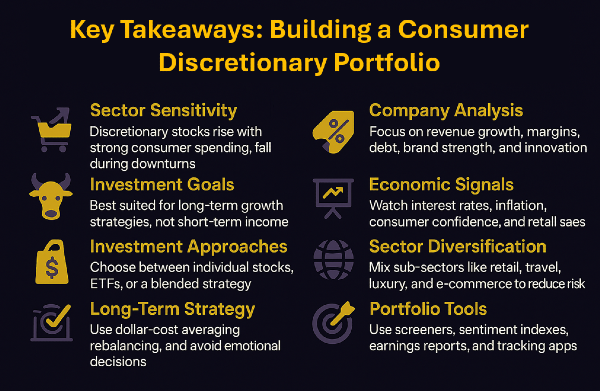
Key Takeaways: Building a Consumer Discretionary Portfolio
| Topic |
Summary |
| Sector Sensitivity |
Discretionary stocks rise with strong consumer spending, fall during downturns. |
| Investment Goals |
Best suited for long-term growth strategies, not short-term income. |
| Allocation Strategy |
Typical allocation is 10–20%; adjust based on age and risk tolerance. |
| Investment Approaches |
Choose between individual stocks, ETFs, or a blended strategy. |
| Company Analysis |
Focus on revenue growth, margins, debt, brand strength, and innovation. |
| Economic Signals |
Watch interest rates, inflation, consumer confidence, and retail sales. |
| Sector Diversification |
Mix sub-sectors like retail, travel, luxury, and e-commerce to reduce risk. |
| Long-Term Strategy |
Use dollar-cost averaging, rebalancing, and avoid emotional decisions. |
| Portfolio Tools |
Use screeners, sentiment indexes, earnings reports, and tracking apps. |
Recommended Reading on Consumer Discretionary Investing
Continue building your expertise with these related analyses and sector guides. Each resource expands on key themes discussed in this article and supports a deeper understanding of consumer discretionary dynamics.














Building a portfolio of consumer discretionary stocks can help investors grow their wealth over time. These companies sell non‑essential goods and services, such as clothing, travel, entertainment, and luxury items. Their performance rises and falls with consumer spending, so choosing the right mix is important. This guide walks through how to build a balanced and thoughtful portfolio in this sector.
Understanding the Consumer Discretionary Sector
Consumer discretionary stocks come from businesses that depend on shoppers having extra money to spend. When the economy is strong, these companies often grow quickly. When times are tough, sales can slow down. This makes the sector more sensitive to economic cycles than others.
Common sub‑sectors include retail, e‑commerce, travel, leisure, restaurants, and luxury goods. Well‑known examples include Amazon (AMZN), Nike (NKE), and Starbucks (SBUX. Each sub‑sector reacts differently to changes in consumer behavior.
Understanding how these companies make money helps investors decide which ones fit their goals. Some focus on brand loyalty. Others rely on global expansion or digital sales. A strong portfolio blends different types of companies to reduce risk.
Step 1: Define Your Investment Goals
Before choosing stocks, investors should think about their goals. Some want long‑term growth. Others want steady income. Consumer discretionary stocks usually fit best in growth‑focused portfolios because they can rise quickly during strong economic periods.
Short‑term traders may look for fast gains, but long‑term investors focus on steady performance over many years. Knowing your goals helps you decide how much risk you can handle.
Step 2: Decide Your Allocation Percentage
Most investors keep consumer discretionary stocks at about 10–20% of their total portfolio. This keeps risk under control while still allowing room for growth. The rest of the portfolio often includes more stable sectors like consumer staples, healthcare, or utilities.
Younger investors may choose a higher allocation because they have more time to recover from downturns. Older investors often prefer a smaller allocation to reduce volatility. The right percentage depends on your age, goals, and comfort with risk.
Table: Sample Allocation by Risk Level
Step 3: Choose Your Investment Approach
There are three main ways to invest in this sector. The first is buying individual stocks. This gives more control and can lead to higher returns. It also requires more research and carries more risk.
The second approach is using ETFs. These funds hold many companies at once. They offer broad exposure and reduce the impact of any single company’s performance. This is a good option for beginners or investors who want less volatility.
The third approach is a blend of both. Some investors buy an ETF for stability and add a few individual stocks they believe in. This creates a balanced mix of safety and potential growth.
Read More: The Top ETFs as Rated by our Top Investors in the Community
Step 4: Analyze Companies Before Investing
Read More: How to Analyze a Consumer Discretionary Stock
Research is important when choosing individual stocks. Investors should look at revenue growth, profit margins, and debt levels. Companies with strong brands often perform better during tough times. Cash flow and pricing power also matter.
Management quality can make a big difference. Leaders who invest in innovation and customer experience often help their companies stay ahead. International expansion can also support long‑term growth.
Red flags include falling sales, rising debt, or shrinking market share. These signs may show that a company is losing its edge.
Step 5: Evaluate Economic and Market Conditions
Consumer discretionary stocks react strongly to economic changes. High interest rates can slow spending. Inflation can raise costs for both companies and shoppers. Consumer confidence surveys help show how people feel about the economy.
Employment trends also matter. When more people have jobs, they tend to spend more. Retail sales data gives clues about which sub‑sectors are gaining momentum.
Investors should adjust their exposure based on these signals. During strong economic periods, discretionary stocks often perform well. During downturns, reducing exposure may help protect the portfolio.
Key Economic Indicators to Watch
Step 6: Diversify Within the Sector
Diversification helps reduce risk. Even within consumer discretionary, different sub‑sectors behave differently. Retail may rise while travel slows. Luxury goods may stay strong even when other areas weaken.
A balanced portfolio includes a mix of retail, e‑commerce, travel, leisure, and entertainment. Some investors also add international companies for global exposure. Mixing growth and value stocks can also help smooth performance.
Avoid putting too much money into one trend, such as only e‑commerce or only travel. Trends change, and a broad mix offers more stability.
Read More: Consumer Discretionary vs Consumer Staples
Step 7: Build a Long-Term Strategy
A long‑term strategy helps investors stay focused. Dollar‑cost averaging spreads out purchases over time. This reduces the impact of market swings. Rebalancing once or twice a year keeps the portfolio aligned with your goals.
During downturns, it can be tempting to sell. But strong companies often recover. Long‑term investors stay patient and avoid emotional decisions. Trimming winners or cutting weak performers helps keep the portfolio healthy.
Step 8: Use Tools to Track and Improve Your Portfolio
Several tools help investors stay informed. Stock screeners make it easy to compare fundamentals. Consumer sentiment indexes show how shoppers feel. Earnings reports reveal how companies are performing. Retail sales data helps track trends.
Portfolio tracking apps help monitor performance and spot changes. Using these tools together gives a clearer picture of the sector. They help investors make better decisions and adjust their strategy when needed.
Conclusion
Building a portfolio of consumer discretionary stocks takes planning and research. A balanced mix of companies and ETFs helps reduce risk. Watching economic trends and using the right tools supports long‑term success. With a clear strategy, investors can benefit from the growth potential of this dynamic sector.
Key Takeaways: Building a Consumer Discretionary Portfolio
Recommended Reading on Consumer Discretionary Investing
Continue building your expertise with these related analyses and sector guides. Each resource expands on key themes discussed in this article and supports a deeper understanding of consumer discretionary dynamics.
The Top Consumer Discretionary Stocks
A dynamic list of leading companies within the sector, highlighting notable performers and long‑term growth drivers. A majority of top investors on StockBossUp rated each company on this list a buy.
What Are Consumer Discretionary Stocks?
An introduction to the sector’s core characteristics and market role.
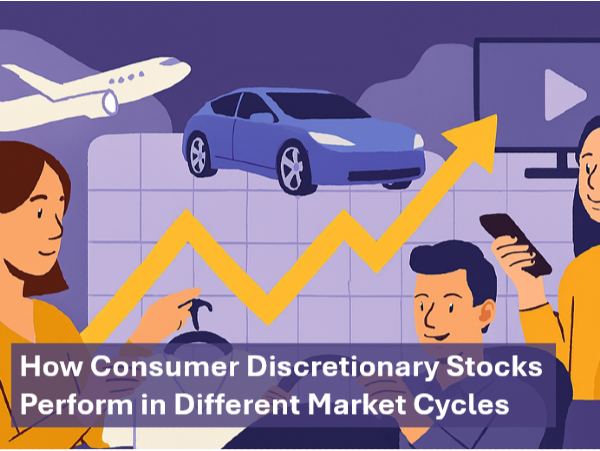
How Consumer Discretionary Stocks Perform in Different Market Cycles
A review of how economic conditions influence sector performance.
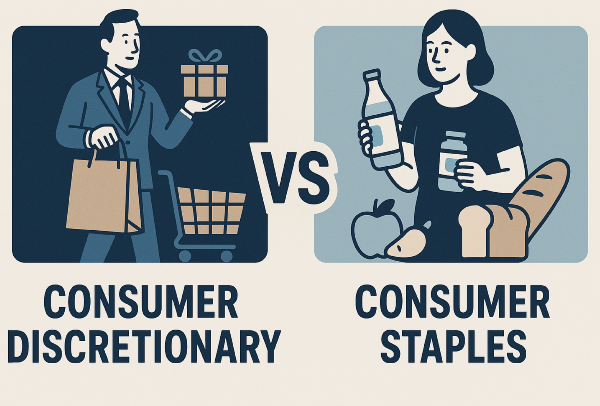
Consumer Discretionary vs Consumer Staples: Key Differences
A comparison of spending patterns, risk profiles, and investment considerations.
How to Analyze Consumer Discretionary Companies
A structured approach to evaluating business models and financial strength.
The Role of Consumer Sentiment in Discretionary Stock Performance
Insight into how consumer confidence and behavioral trends shape demand.
How Interest Rates Impact Consumer Discretionary Stocks
An examination of rate sensitivity and macroeconomic pressures.
Are Consumer Discretionary Stocks Good for Long Term Investors?
A long term perspective on growth potential and sector volatility.
How to Build a Portfolio of Consumer Discretionary Stocks
Practical guidance for constructing and managing sector exposure.
Best ETFs for Consumer Discretionary Exposure
A review of leading ETFs offering diversified access to the sector.
How to Classify a Stock as Consumer Discretionary
A clear explanation of classification standards and sector placement.