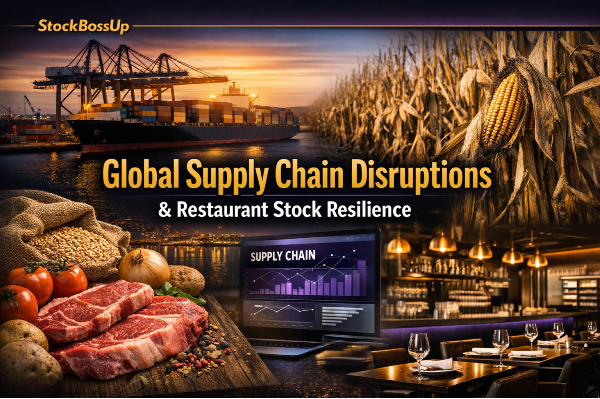
🔑 Key Takeaways: Global Supply Chain Disruptions and Restaurant Stock Resilience
🚢 **Adaptability is the Core of Resilience**
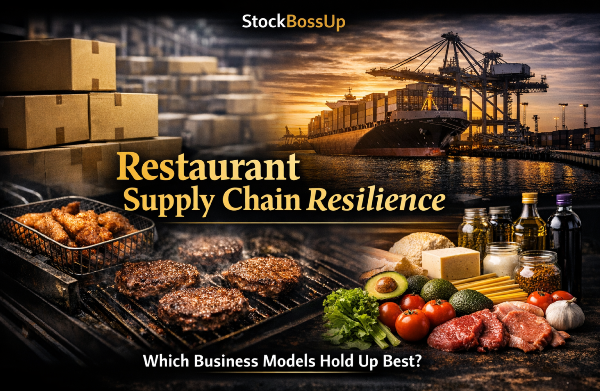
Restaurant stocks that thrive during global supply chain disruptions share one defining trait—**adaptability**. They can shift suppliers, adjust menus, and manage inventory without losing momentum. This flexibility protects margins and keeps operations steady even when global logistics falter.
📦 **Technology Turns Chaos into Control**
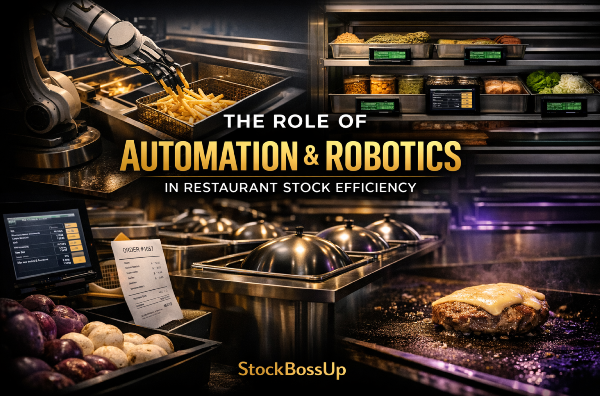
Brands using advanced tracking and predictive systems recover faster from disruptions. Real‑time logistics tools, automated ordering, and data‑driven forecasting help restaurants anticipate shortages before they happen, turning unpredictable supply chains into manageable systems.
🌾 **Menu Simplicity Reduces Risk**
Simpler menus mean fewer vulnerable ingredients and faster adaptation when shortages occur. Restaurants that design menus around flexible, widely available items maintain consistency and customer trust—key factors that stabilize their stock performance during global uncertainty.
💹 **Investor Insight Lies Beyond Revenue**
Strong restaurant stocks aren’t just about profit margins; they reflect **supply chain strength**. Investors who analyze supplier diversity, freight costs, and recovery speed gain a clearer picture of long‑term resilience—often spotting winners before the market does.
Global supply chains have been under pressure for years, but the restaurant industry has felt the strain in a special way. Costs rise. Deliveries slow. Key ingredients vanish without warning. Many restaurant brands try to adjust, yet some still fall behind. The real challenge is not only the delays or the higher prices. It is the hidden weakness that most investors overlook. That weakness shapes which restaurant stocks stay strong and which ones struggle. The answer is not obvious at first, and it takes time to see how the pieces fit together.
Before we reach that answer, we need to understand how supply chains break, why some companies bounce back faster, and what patterns show up again and again. Only then does the real solution become clear.
Why Do Global Supply Chains Break Down So Easily?
Supply chains look simple on paper. A farm grows food. A truck moves it. A restaurant cooks it. But each step depends on dozens of smaller steps. When even one of those steps slows down, the whole chain feels it. Weather events can wipe out crops. Ports can get backed up. Labor shortages can stop production lines. A single missing part can delay an entire shipment.
Restaurants feel these shocks faster than most industries. Food spoils. Demand changes by the hour. Customers expect the same menu every day. When a key ingredient runs out, the brand takes a hit. When prices rise, margins shrink. Even small disruptions can ripple through the system.
One detail many people miss is how global the food system has become. A simple menu item may rely on ingredients from several countries. A sauce might use spices from Asia, tomatoes from Mexico, and packaging from the United States. If any region faces trouble, the whole product is at risk.
What Happens to Restaurant Stocks When Supply Chains Slow Down?
Investors watch restaurant stocks closely because the industry reacts quickly to change. When supply chains slow down, costs rise. When costs rise, margins fall. Stocks often drop before the public even notices the shortage. This happens because investors track freight rates, crop yields, and commodity prices long before the news reaches customers.
Restaurants with weak supply chains see the biggest impact. They may pay more for ingredients. They may need to change menu items. They may even close stores for short periods. All of this affects revenue. Stocks tied to these brands often fall during long disruptions.
But not all restaurant stocks react the same way. Some brands stay stable even when the world around them becomes unpredictable. These companies have built systems that protect them from shocks. Their stocks may dip for a moment, but they recover faster. Understanding why this happens is key to spotting long‑term winners.
Which Parts of the Supply Chain Hurt Restaurants the Most?
Not every disruption hits with the same force. Some problems cause mild delays. Others create major financial stress. Three areas tend to cause the most trouble:
Ingredient shortages
When crops fail or suppliers fall behind, restaurants must scramble to find replacements. This can raise costs or force menu changes.
Transportation delays
Ports, trucking networks, and rail systems can slow down. When this happens, even available ingredients arrive late.
Packaging and equipment shortages
Restaurants rely on containers, cups, lids, and cooking tools. When these items run short, operations slow down.
One unique fact is that the global food system wastes nearly one‑third of all food produced each year. This means that even during shortages, the world still loses massive amounts of usable food. That waste adds pressure to an already fragile system.
How Do Rising Costs Change Restaurant Strategy?
When supply chain costs rise, restaurants must choose how to respond. Some raise menu prices. Others shrink portion sizes. Some switch suppliers. A few redesign their entire menu to reduce risk.
Price increases can help, but only if customers accept them. If prices rise too fast, demand drops. If portions shrink too much, customers complain. The balance is delicate.
Larger brands often have more power. They can negotiate better deals. They can buy in bulk. They can lock in long‑term contracts. Smaller brands do not have this advantage. They may pay more for the same ingredients, which hurts their margins.
This difference in buying power is one reason why some restaurant stocks stay strong during global disruptions. Investors know which companies can protect their margins and which ones cannot.
Why Do Some Restaurants Recover Faster Than Others?
Recovery depends on preparation. Restaurants that plan ahead bounce back faster. They build relationships with multiple suppliers. They store extra inventory. They invest in technology that tracks shipments in real time.
Some brands even redesign their menus to reduce risk. They choose ingredients that are easier to source. They simplify recipes. They train staff to adapt quickly. These steps help them stay flexible when the world changes.
Some restaurant chains even use predictive weather models to plan ingredient orders weeks in advance. This helps them avoid shortages caused by storms or droughts. Most customers never realize how much science goes into keeping their favorite meals available.
How Do Investors Measure Supply Chain Strength?
Investors look for signs that a restaurant company can handle disruptions. They study financial reports. They track inventory levels. They watch how often menu items change. They also look at how much a company spends on logistics and technology.
A company with strong supply chain systems usually shows:
- Stable margins
- Fewer menu shortages
- Faster recovery after disruptions
- Lower freight costs
- Strong relationships with suppliers
These signals help investors decide which stocks are likely to stay resilient.
Ingredient Cost Trends (Recent Years)
| Ingredient Type |
Typical Volatility |
Impact on Restaurants |
| Proteins |
High |
Major menu changes |
| Produce |
Medium |
Seasonal shortages |
| Grains |
Medium |
Price swings |
| Dairy |
High |
Margin pressure |
Why Do Some Restaurant Models Fail Under Pressure?
Some restaurant models rely heavily on a single ingredient or supplier. When that ingredient becomes scarce, the entire menu suffers. Brands with complex menus also face more risk. More ingredients mean more chances for something to go wrong.
Fast‑casual chains with simple menus often do better. They use fewer ingredients. They can switch suppliers more easily. They can adjust recipes without confusing customers.
Another weak point is labor. Restaurants need trained staff to handle disruptions. If a company struggles with staffing, even small supply issues can turn into major problems.
What Role Does Technology Play in Supply Chain Resilience?
Technology has become a major advantage. Modern restaurant chains use software to track shipments, predict shortages, and manage inventory. These tools help them react faster than competitors.
Some systems can even adjust orders automatically when demand changes. Others alert managers when a supplier falls behind. This reduces waste and prevents shortages.
Brands that invest in technology often see smoother operations. Their stocks tend to be more stable because investors trust their systems.
How Do Global Events Shape Restaurant Stock Performance?
Global events can change supply chains overnight. A storm can shut down a port. A conflict can disrupt trade routes. A drought can reduce crop yields. When these events happen, restaurant stocks react quickly.
Investors watch global news closely. They know that even small events can affect food prices. When uncertainty rises, stocks tied to fragile supply chains often fall. Stocks tied to strong supply chains may rise as investors look for safer options.
Restaurant Stock Sensitivity to Disruptions
| Restaurant Type |
Sensitivity Level |
Reason |
| Fast Casual |
Low to Medium |
Simple menus |
| Full Service |
Medium to High |
Complex menus |
| Coffee Chains |
Medium |
Global sourcing |
| Pizza Chains |
Low |
Stable ingredients |
Why Do Some Investors Miss the Warning Signs?
Many investors focus on revenue and profit. They overlook supply chain data. They assume that if a restaurant is popular, it must be stable. But popularity does not protect a brand from shortages.
Some investors also underestimate how global the food system has become. They may not realize that a drought in one country can affect a menu item thousands of miles away. Without this understanding, they miss early warning signs.
What Can Restaurants Do to Protect Their Supply Chains?
Restaurants can take several steps to reduce risk:
- Build relationships with multiple suppliers
- Use technology to track shipments
- Simplify menus
- Store extra inventory when possible
- Train staff to adapt quickly
- Lock in long‑term contracts for key ingredients
These steps help companies stay flexible. They also help protect margins during global disruptions.
Why Does Menu Design Matter More Than People Think?
Menu design shapes supply chain risk. A menu with many unique ingredients is harder to support. A menu with flexible ingredients is easier to manage. Some brands design their menus around items that can be sourced from multiple regions. This reduces the chance of shortages.
Simple menus also help with training. Staff can learn recipes faster. Kitchens run more smoothly. When disruptions happen, these brands can adjust without losing quality.
Menu Complexity and Supply Chain Risk
| Menu Style |
Risk Level |
Notes |
| Highly Complex |
High |
Many ingredients |
| Moderately Complex |
Medium |
Some flexibility |
| Simple Menu |
Low |
Easy to adjust |
What Patterns Show Up in the Most Resilient Restaurant Stocks?
Resilient restaurant stocks share several traits:
- Strong supplier networks
- Simple or flexible menus
- Investment in technology
- Stable margins
- Ability to raise prices slowly
- Strong brand loyalty
These companies do not avoid disruptions. They simply handle them better. Their systems allow them to adapt quickly. Investors reward this stability.
What Is the Hidden Factor That Predicts Long‑Term Resilience?
The hidden factor is supply chain adaptability. Not strength. Not size. Not even cost control. Adaptability is the real advantage. It is the ability to change suppliers, adjust menus, shift inventory, and respond to global events without losing momentum.
Adaptability turns disruptions into temporary setbacks instead of long‑term problems. It protects margins. It protects brand reputation. It protects stock performance.
This is the piece many investors overlook. They focus on short‑term numbers. They miss the deeper systems that keep a company stable.
What Does This Mean for the Future of Restaurant Stocks?
Global supply chains will continue to face pressure. Weather patterns are changing. Trade routes are shifting. Labor markets remain unpredictable. Restaurants that invest in adaptability will stay strong. Those that ignore supply chain risk may fall behind.
Investors who understand this pattern will spot winners earlier. They will see which brands prepare for the future and which ones hope for the best.
What Should Investors Watch Going Forward?
Investors should track:
- Ingredient volatility
- Supplier diversity
- Menu flexibility
- Technology investment
- Freight costs
- Inventory levels
- Speed of recovery after disruptions
These signals reveal how well a company can handle global uncertainty.
So What Is the Real Solution to the Problem Introduced at the Start?
The real solution is building restaurant systems that can bend without breaking. Adaptability is the key. It is the trait that separates resilient restaurant stocks from fragile ones. Companies that embrace adaptability will continue to thrive even when global supply chains face new challenges.
🚀 Expand Your Edge: Elite Restaurant & Consumer Insights
Ready to dominate the sector? Our Investor Intelligence Hub is designed to help you navigate the complex world of restaurant equities with precision. From deep-dive fundamental analysis to macroeconomic strategy, explore our curated silos below to find your next big winner.
🍽️ Sector Fundamentals & Top Picks
📊 Deep-Dive Financial Analysis
🧠 Strategic Operations & Economics
🌍 Macro, Risk & Global Trends
💡 Investor Psychology & Behavioral Trends
🔍 Advanced Intelligence









🔑 Key Takeaways: Global Supply Chain Disruptions and Restaurant Stock Resilience
🚢 **Adaptability is the Core of Resilience**
Restaurant stocks that thrive during global supply chain disruptions share one defining trait—**adaptability**. They can shift suppliers, adjust menus, and manage inventory without losing momentum. This flexibility protects margins and keeps operations steady even when global logistics falter.📦 **Technology Turns Chaos into Control**
Brands using advanced tracking and predictive systems recover faster from disruptions. Real‑time logistics tools, automated ordering, and data‑driven forecasting help restaurants anticipate shortages before they happen, turning unpredictable supply chains into manageable systems.🌾 **Menu Simplicity Reduces Risk**
Simpler menus mean fewer vulnerable ingredients and faster adaptation when shortages occur. Restaurants that design menus around flexible, widely available items maintain consistency and customer trust—key factors that stabilize their stock performance during global uncertainty.💹 **Investor Insight Lies Beyond Revenue**
Strong restaurant stocks aren’t just about profit margins; they reflect **supply chain strength**. Investors who analyze supplier diversity, freight costs, and recovery speed gain a clearer picture of long‑term resilience—often spotting winners before the market does.Global supply chains have been under pressure for years, but the restaurant industry has felt the strain in a special way. Costs rise. Deliveries slow. Key ingredients vanish without warning. Many restaurant brands try to adjust, yet some still fall behind. The real challenge is not only the delays or the higher prices. It is the hidden weakness that most investors overlook. That weakness shapes which restaurant stocks stay strong and which ones struggle. The answer is not obvious at first, and it takes time to see how the pieces fit together.
Before we reach that answer, we need to understand how supply chains break, why some companies bounce back faster, and what patterns show up again and again. Only then does the real solution become clear.
Why Do Global Supply Chains Break Down So Easily?
Supply chains look simple on paper. A farm grows food. A truck moves it. A restaurant cooks it. But each step depends on dozens of smaller steps. When even one of those steps slows down, the whole chain feels it. Weather events can wipe out crops. Ports can get backed up. Labor shortages can stop production lines. A single missing part can delay an entire shipment.
Restaurants feel these shocks faster than most industries. Food spoils. Demand changes by the hour. Customers expect the same menu every day. When a key ingredient runs out, the brand takes a hit. When prices rise, margins shrink. Even small disruptions can ripple through the system.
One detail many people miss is how global the food system has become. A simple menu item may rely on ingredients from several countries. A sauce might use spices from Asia, tomatoes from Mexico, and packaging from the United States. If any region faces trouble, the whole product is at risk.
What Happens to Restaurant Stocks When Supply Chains Slow Down?
Investors watch restaurant stocks closely because the industry reacts quickly to change. When supply chains slow down, costs rise. When costs rise, margins fall. Stocks often drop before the public even notices the shortage. This happens because investors track freight rates, crop yields, and commodity prices long before the news reaches customers.
Restaurants with weak supply chains see the biggest impact. They may pay more for ingredients. They may need to change menu items. They may even close stores for short periods. All of this affects revenue. Stocks tied to these brands often fall during long disruptions.
But not all restaurant stocks react the same way. Some brands stay stable even when the world around them becomes unpredictable. These companies have built systems that protect them from shocks. Their stocks may dip for a moment, but they recover faster. Understanding why this happens is key to spotting long‑term winners.
Which Parts of the Supply Chain Hurt Restaurants the Most?
Not every disruption hits with the same force. Some problems cause mild delays. Others create major financial stress. Three areas tend to cause the most trouble:
Ingredient shortages When crops fail or suppliers fall behind, restaurants must scramble to find replacements. This can raise costs or force menu changes.
Transportation delays Ports, trucking networks, and rail systems can slow down. When this happens, even available ingredients arrive late.
Packaging and equipment shortages
Restaurants rely on containers, cups, lids, and cooking tools. When these items run short, operations slow down.
One unique fact is that the global food system wastes nearly one‑third of all food produced each year. This means that even during shortages, the world still loses massive amounts of usable food. That waste adds pressure to an already fragile system.
How Do Rising Costs Change Restaurant Strategy?
When supply chain costs rise, restaurants must choose how to respond. Some raise menu prices. Others shrink portion sizes. Some switch suppliers. A few redesign their entire menu to reduce risk.
Price increases can help, but only if customers accept them. If prices rise too fast, demand drops. If portions shrink too much, customers complain. The balance is delicate.
Larger brands often have more power. They can negotiate better deals. They can buy in bulk. They can lock in long‑term contracts. Smaller brands do not have this advantage. They may pay more for the same ingredients, which hurts their margins.
This difference in buying power is one reason why some restaurant stocks stay strong during global disruptions. Investors know which companies can protect their margins and which ones cannot.
Why Do Some Restaurants Recover Faster Than Others?
Recovery depends on preparation. Restaurants that plan ahead bounce back faster. They build relationships with multiple suppliers. They store extra inventory. They invest in technology that tracks shipments in real time.
Some brands even redesign their menus to reduce risk. They choose ingredients that are easier to source. They simplify recipes. They train staff to adapt quickly. These steps help them stay flexible when the world changes.
Some restaurant chains even use predictive weather models to plan ingredient orders weeks in advance. This helps them avoid shortages caused by storms or droughts. Most customers never realize how much science goes into keeping their favorite meals available.
How Do Investors Measure Supply Chain Strength?
Investors look for signs that a restaurant company can handle disruptions. They study financial reports. They track inventory levels. They watch how often menu items change. They also look at how much a company spends on logistics and technology.
A company with strong supply chain systems usually shows:
These signals help investors decide which stocks are likely to stay resilient.
Ingredient Cost Trends (Recent Years)
Why Do Some Restaurant Models Fail Under Pressure?
Some restaurant models rely heavily on a single ingredient or supplier. When that ingredient becomes scarce, the entire menu suffers. Brands with complex menus also face more risk. More ingredients mean more chances for something to go wrong.
Fast‑casual chains with simple menus often do better. They use fewer ingredients. They can switch suppliers more easily. They can adjust recipes without confusing customers.
Another weak point is labor. Restaurants need trained staff to handle disruptions. If a company struggles with staffing, even small supply issues can turn into major problems.
What Role Does Technology Play in Supply Chain Resilience?
Technology has become a major advantage. Modern restaurant chains use software to track shipments, predict shortages, and manage inventory. These tools help them react faster than competitors.
Some systems can even adjust orders automatically when demand changes. Others alert managers when a supplier falls behind. This reduces waste and prevents shortages.
Brands that invest in technology often see smoother operations. Their stocks tend to be more stable because investors trust their systems.
How Do Global Events Shape Restaurant Stock Performance?
Global events can change supply chains overnight. A storm can shut down a port. A conflict can disrupt trade routes. A drought can reduce crop yields. When these events happen, restaurant stocks react quickly.
Investors watch global news closely. They know that even small events can affect food prices. When uncertainty rises, stocks tied to fragile supply chains often fall. Stocks tied to strong supply chains may rise as investors look for safer options.
Restaurant Stock Sensitivity to Disruptions
Why Do Some Investors Miss the Warning Signs?
Many investors focus on revenue and profit. They overlook supply chain data. They assume that if a restaurant is popular, it must be stable. But popularity does not protect a brand from shortages.
Some investors also underestimate how global the food system has become. They may not realize that a drought in one country can affect a menu item thousands of miles away. Without this understanding, they miss early warning signs.
What Can Restaurants Do to Protect Their Supply Chains?
Restaurants can take several steps to reduce risk:
These steps help companies stay flexible. They also help protect margins during global disruptions.
Why Does Menu Design Matter More Than People Think?
Menu design shapes supply chain risk. A menu with many unique ingredients is harder to support. A menu with flexible ingredients is easier to manage. Some brands design their menus around items that can be sourced from multiple regions. This reduces the chance of shortages.
Simple menus also help with training. Staff can learn recipes faster. Kitchens run more smoothly. When disruptions happen, these brands can adjust without losing quality.
Menu Complexity and Supply Chain Risk
What Patterns Show Up in the Most Resilient Restaurant Stocks?
Resilient restaurant stocks share several traits:
These companies do not avoid disruptions. They simply handle them better. Their systems allow them to adapt quickly. Investors reward this stability.
What Is the Hidden Factor That Predicts Long‑Term Resilience?
The hidden factor is supply chain adaptability. Not strength. Not size. Not even cost control. Adaptability is the real advantage. It is the ability to change suppliers, adjust menus, shift inventory, and respond to global events without losing momentum.
Adaptability turns disruptions into temporary setbacks instead of long‑term problems. It protects margins. It protects brand reputation. It protects stock performance.
This is the piece many investors overlook. They focus on short‑term numbers. They miss the deeper systems that keep a company stable.
What Does This Mean for the Future of Restaurant Stocks?
Global supply chains will continue to face pressure. Weather patterns are changing. Trade routes are shifting. Labor markets remain unpredictable. Restaurants that invest in adaptability will stay strong. Those that ignore supply chain risk may fall behind.
Investors who understand this pattern will spot winners earlier. They will see which brands prepare for the future and which ones hope for the best.
What Should Investors Watch Going Forward?
Investors should track:
These signals reveal how well a company can handle global uncertainty.
So What Is the Real Solution to the Problem Introduced at the Start?
The real solution is building restaurant systems that can bend without breaking. Adaptability is the key. It is the trait that separates resilient restaurant stocks from fragile ones. Companies that embrace adaptability will continue to thrive even when global supply chains face new challenges.
🚀 Expand Your Edge: Elite Restaurant & Consumer Insights
Ready to dominate the sector? Our Investor Intelligence Hub is designed to help you navigate the complex world of restaurant equities with precision. From deep-dive fundamental analysis to macroeconomic strategy, explore our curated silos below to find your next big winner.
🍽️ Sector Fundamentals & Top Picks
📊 Deep-Dive Financial Analysis
🧠 Strategic Operations & Economics
🌍 Macro, Risk & Global Trends
💡 Investor Psychology & Behavioral Trends
🔍 Advanced Intelligence