Last updated on April 13th 2026 by Chaster Johnson
Restaurant stocks attract many investors because they sit at the center of everyday life. People eat out for convenience, celebration, and comfort. This steady demand helps restaurant companies grow even when the economy shifts. These businesses also belong to the consumer cyclical sector, which is sometimes called the consumer discretionary sector. That means their performance often rises and falls with consumer spending.
Investors watch this industry closely because it blends brand power, customer loyalty, and long‑term growth. Some companies expand through franchising. Others grow by opening new stores or improving digital ordering. These different strategies give investors many ways to find value.
Restaurant stocks also change quickly. Trends like delivery apps, mobile ordering, and loyalty programs shape how companies compete. Investors who follow these trends can spot strong opportunities early.
Top Restaurant Stocks Categories
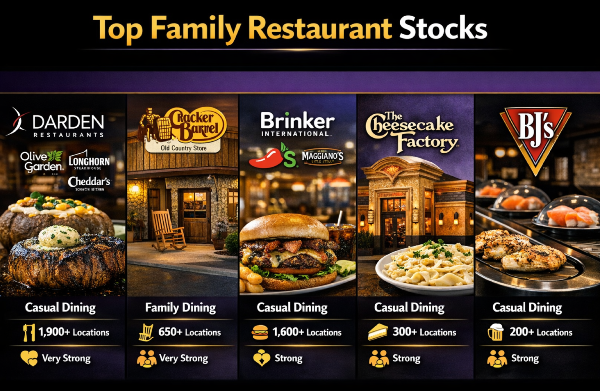
The top family restaurant stocks, an example stock category
The restaurant industry is full of iconic brands, fast‑growing newcomers, and fierce category rivalries—and our newest deep‑dive articles make it easy to explore every corner of the market. If you want to compare cuisine‑specific segments, start with the top pizza stocks or browse the top taco stocks to see which chains are gaining momentum. For investors studying direct matchups, our breakdowns—like the Domino’s vs. Pizza Hut stock comparison and the Taco Bell vs. Chipotle matchup—show how each brand competes on growth, margins, and long‑term strategy.
To help you navigate the broader landscape, we’ve also organized guides that highlight the most important parts of the restaurant market. You can explore investor‑rated leaders in the top fast‑food stocks, compare full‑service chains in the top sit‑down restaurant stocks, or dig into category matchups like the steakhouse stock battle. Whether you’re building a watchlist, researching a specific cuisine segment, or comparing rival chains, this section gives you a simple, mobile‑friendly path through the entire restaurant‑stock ecosystem.
| Article Title |
Brief Description |
| The Top Pizza Stocks |
A breakdown of the strongest pizza‑focused restaurant stocks, highlighting brand strength, growth trends, and long‑term performance drivers. |
| The Top Taco Stocks |
A look at the top taco and Mexican‑inspired chains, covering demand trends, expansion strategies, and what sets each brand apart. |
| Domino’s (DPZ) vs. Pizza Hut (YUM) |
A head‑to‑head comparison of two major pizza giants, focusing on revenue growth, store models, and competitive advantages. |
| Taco Bell (YUM) vs. Chipotle (CMG) |
A spicy matchup between two category leaders, analyzing brand strategy, customer loyalty, and long‑term stock potential. |
| The Top Fast Food Stocks Rated by You |
Investor‑driven rankings of the most popular fast‑food stocks, based on performance, brand strength, and user sentiment. |
| The Top Sit Down Restaurants |
A guide to leading sit‑down and casual‑dining chains, highlighting revenue trends, customer traffic, and competitive positioning. |
| The Battle of the Steak House Stocks |
A comparison of top steakhouse brands, exploring pricing power, customer demand, and long‑term growth outlook. |
| Every Healthy Choice Restaurant Stock you can Invest in |
A stock battle of the health food restaurants. The top healthy stock ideas are picked by you! |
What Makes Restaurant Stocks Different
Restaurant companies face unique challenges. Food costs can rise fast. Labor shortages can hurt service. Competition is intense. Even small changes in menu prices can affect customer traffic. But strong brands can still grow through smart marketing and better operations.
Digital tools also matter. Many restaurants now rely on mobile apps, online ordering, and delivery partnerships. These tools help companies reach more customers and increase sales. Investors often reward companies that use technology well.
International growth is another factor. Some brands expand into new countries to reach millions of new customers. This can create long‑term growth if the brand travels well.
Industry Snapshot Table
| Category |
Key Factors |
Investor Notes |
| Fast Food |
Speed, value, franchising |
Often stable during downturns |
| Fast Casual |
Quality, customization |
Strong digital adoption |
| Casual Dining |
Experience, menu variety |
Sensitive to economic cycles |
| Specialty Concepts |
Coffee, desserts, beverages |
High brand loyalty |
Restaurant Industry Outlook: Key Trends
The restaurant industry outlook for 2026–2027 shows steady growth, even as brands face rising food costs, higher wages, and tighter real estate markets. Many restaurants are shifting to smaller footprints, smarter scheduling tools, and AI‑powered technology to stay profitable. Consumer demand remains strong, especially for convenience, healthier menu choices, and digital ordering. These trends help restaurants keep traffic high while managing costs more effectively.
Franchise growth is also accelerating. People continue to spend more on food away from home, which boosts drive‑thru expansion, mobile ordering, and hybrid formats that mix fast‑casual dining with quick pickup options. Automation—like robotic fryers, AI drive‑thru systems, and self‑service kiosks—helps franchises handle labor shortages and improve speed. Fast‑growing segments include chicken chains, coffee shops, dessert brands, and plant‑forward concepts, all supported by strong customer demand and efficient store models.
These industry shifts are helping many restaurant companies report rising EPS (Earnings Per Share). Brands with strong digital systems, smart menu planning, and efficient supply chains often see the biggest gains. Companies like McDonald’s, Chipotle, Wingstop, Dutch Bros, and Sweetgreen benefit from higher same‑store sales, better cost control, and steady expansion. Rising EPS usually signals healthier profits, stronger margins, and long‑term growth potential for investors.
Read More: Restaurant Stocks with Rising EPS
Looking ahead, the strongest opportunities come from restaurants that embrace technology, simplify operations, and meet changing customer habits. Trends like AI forecasting, loyalty apps, first‑party delivery, healthier menus, and global expansion will shape the next wave of winners. For everyday investors, restaurant stocks with rising EPS, strong digital adoption, and scalable franchise models may offer some of the most promising growth in 2026.
How to Evaluate Restaurant Stocks
Read More: How to Evaluate Restaurant Stocks: In Depth Guide
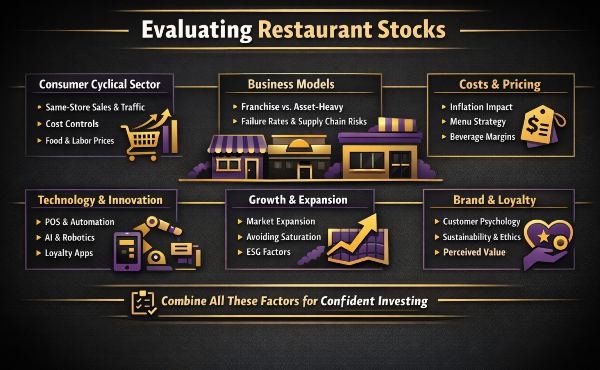
Restaurant stocks can be strong opportunities, but you need to know what drives their performance. The restaurant industry sits inside the consumer cyclical sector, which means sales rise when people feel confident and fall when budgets tighten. Investors look at things like same‑store sales, traffic trends, and how well a company controls costs. Inflation, food prices, and labor costs all play a major role in earnings. When beef, chicken, or produce prices rise, margins shrink fast unless the company has strong pricing power or efficient operations.
A big part of evaluating restaurant stocks is understanding their business model. Asset‑light brands that franchise most of their stores often enjoy higher margins and lower risk, while asset‑heavy companies that own many locations face more costs but may keep more revenue. Failure rates also matter. Restaurants with weak unit‑level economics close more stores, which hurts comps and cash flow. Supply chain strength is another key factor. Companies that depend on a few vendors or volatile commodities face bigger risks when disruptions hit transportation, farming, or global logistics.
Technology is changing the industry too. Restaurants that invest in technology adoption like POS systems, automation, AI ordering, robotics, and loyalty apps often improve speed, accuracy, and customer lifetime value. Menu pricing strategy also affects stock performance. Smart menu engineering, shrinkflation, and understanding price elasticity help companies protect margins without losing customers. Beverage mix is another hidden driver. Drinks have some of the highest margins in the industry, so chains with strong beverage programs often report better profitability.
Growth strategy and brand strength round out the picture. Investors look at how well a company expands into new markets, avoids cannibalizing its own stores, and manages saturation. ESG factors—like sustainability, ethical sourcing, and energy use—are becoming more important as institutions favor responsible brands. Finally, consumer psychology plays a major role. Consumer psychology when choosing restaurants, like habit loops, brand loyalty, and perceived value help certain chains stay resilient even during downturns. When you combine all these factors, you get a full picture of how to evaluate restaurant stocks with confidence.
How to Use Metrics and Financial Statements to Value a Restaurant Stock
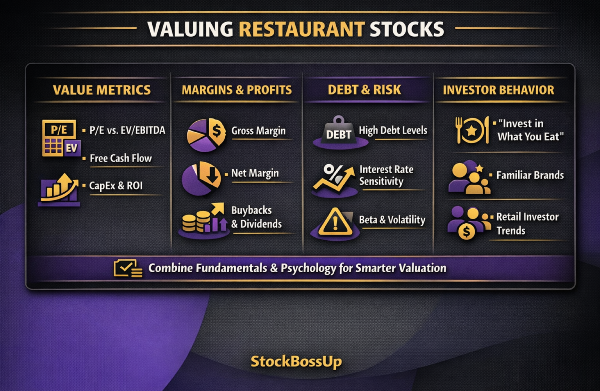
Restaurant metrics for valuing a restaurant stock
Restaurant stocks can be tricky to value because their numbers move fast and their business models vary widely. Many investors rely only on simple metrics like the P/E ratio, but this can lead to mistakes. A better approach is to compare P/E with EV/EBITDA, which shows how much a company is worth after including debt. This matters because restaurants often carry heavy borrowing, and ignoring it can make a stock look cheaper than it really is. Understanding margins, cash flow, and risk helps investors avoid overpaying for popular brands.
A key part of restaurant valuation is studying free cash flow, because it shows how much real money the business keeps after paying its bills. Strong free cash flow supports expansion, buybacks, and dividends. But investors also need to watch restaurant CapEx and ROI. Some chains open new units that never earn back their cost, while others scale with high returns and low risk of cannibalizing nearby stores. Margins also play a major role. Gross margin shows how well a restaurant controls food and labor costs, while net margin reveals the true profit after rent, interest, and taxes. Together, these numbers help investors judge long‑term strength.
Risk is another major factor in restaurant stock valuation. Debt levels can increase volatility, especially when interest rates rise or sales slow. High‑debt chains often swing harder during downturns, which affects their beta, a measure of how much a stock moves compared to the market.
Restaurant buybacks can also be misleading. Some companies repurchase shares to signal confidence, while others do it to hide slowing growth. Understanding these signals helps investors separate strong operators from those masking deeper problems.
Investor behavior also shapes restaurant stock prices. Many people buy what they know, which fuels the “invest in what you eat” trend. Familiar brands feel safer, especially in bull markets when consumers spend more and restaurant traffic rises. Retail investors often chase familiar restaurants they visit every week, even if the financials are weak. This is why a full valuation approach—using EV/EBITDA, cash flow trends, margins, debt levels, and risk—gives a clearer picture than brand loyalty alone. When investors combine fundamentals with an understanding of market psychology, they make smarter decisions and avoid common traps in the restaurant sector.
Technology Innovation in the Restaurant Industry
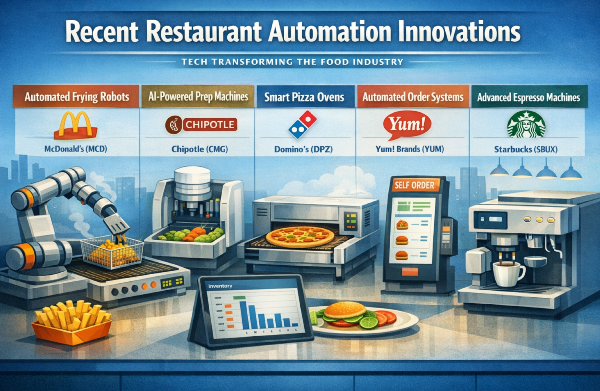
Kitchen automation in restaurants fuel growth
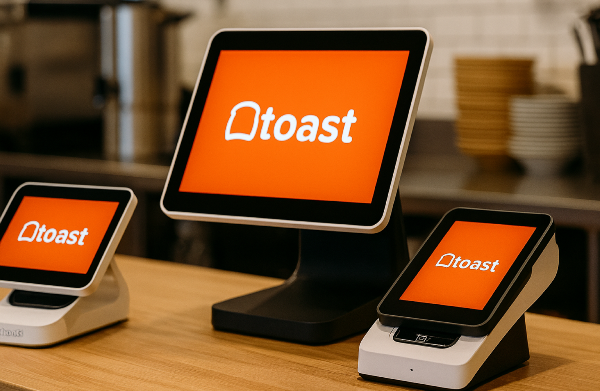
The restaurant industry is changing fast, and the biggest driver is technology. Companies like Sagteс Global, Toast, PAR Technology, Square, Olo, and DoorDash are building the digital tools restaurants now depend on—everything from POS systems and AI forecasting to delivery integration and workflow automation. At the same time, major chains such as McDonald’s, Starbucks, Domino’s, Yum! Brands, Restaurant Brands International, and Papa Johns are using AI, robotics, and digital ordering to boost speed, accuracy, and customer satisfaction. Together, these tech providers and restaurant operators form the core of today’s restaurant‑tech investment landscape.
Read More: The Top Stocks Driving Restaurant and Tech Innovation
AI is becoming a must‑have across the industry. Restaurants use it to forecast sales, manage inventory, reduce food waste, and automate drive‑thru ordering. Top restaurant brands are leading the AI push with tools that improve labor planning, personalize orders, and optimize delivery routes. These upgrades help restaurants run smoother while protecting margins in a high‑cost environment. For investors, AI adoption often signals stronger long‑term growth, better efficiency, and more predictable earnings.
Digital ordering and app ecosystems are also reshaping stock performance. Chains with strong mobile apps - especially those with loyalty programs - see higher repeat visits, bigger order sizes, and more stable revenue. Restaurant apps create habit‑forming customer loops through rewards, mobile pay, and fast pickup. Digital orders also produce valuable data that helps restaurants plan menus, reduce waste, and improve marketing. Investors reward brands that show rising digital sales, strong loyalty engagement, and smooth digital operations.
Kitchen automation is the final piece driving margin growth. Smart fryers, automated grills, portioning tools, and inventory sensors help restaurants cut labor costs, reduce waste, and improve consistency. Chains are testing or deploying automated systems to speed up prep and boost throughput. The biggest gains come when automation is paired with redesigned workflows, leading to faster service, better food quality, and stronger long‑term profitability. For investors, companies that combine AI, digital ordering, and kitchen automation often deliver the most reliable performance in the modern restaurant economy.
Restaurant Stock Niches and Thematic Trends
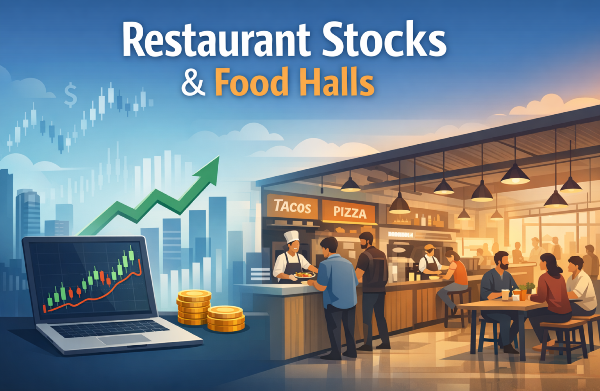
Food Halls, an example of a stock niche.
Restaurant stocks in college towns often grow faster than people expect. These areas have steady foot traffic, young customers who eat out often, and strong demand for affordable meals. Chains that offer quick service, late‑night options, or flexible menus tend to perform well because students value convenience and price. When a brand becomes a campus favorite, it can build long‑term loyalty that follows students after graduation, giving investors a powerful early signal of future growth.
Many of the same forces shaping college‑town restaurants also show up in other niche trends. Pet‑friendly restaurants, for example, attract younger customers who want social, outdoor restaurant spaces where they can bring their pets. This group overlaps heavily with college‑age diners, creating a shared demand for casual, community‑driven dining. Investors watching these trends can spot brands that adapt quickly to lifestyle shifts, which often leads to stronger customer retention and higher store traffic.
Food halls add another layer to the story. These spaces thrive in walkable, high‑traffic areas—just like college towns. They offer variety, local flavor, and flexible pricing, which appeals to students and young professionals. For restaurant companies, food halls act as low‑risk testing grounds for new concepts. A brand that succeeds in a food hall near a university often has a strong chance of scaling into full locations or expanding into nearby cities.
Airport restaurants show how high‑traffic environments can boost brand visibility and revenue. While airports are very different from college towns, both settings share one key advantage: a steady stream of customers who need fast, reliable food options. Brands that perform well in airports often have strong operational systems, efficient menus, and broad name recognition. When a restaurant chain succeeds across multiple niche environments—college towns, pet‑friendly spaces, food halls, and airports—it signals strong adaptability and long‑term investment potential.
Frequently Asked Questions about Restaurant Stocks
Why Restaurant Stocks Fit in a Consumer Cyclical Portfolio
Restaurant stocks move with consumer spending. When people feel confident, they eat out more often. When the economy slows, they may cut back. This makes restaurant stocks a classic part of the consumer cyclical sector.
Investors often use these stocks to capture growth during strong economic periods. Some companies also perform well during downturns if they offer value pricing or strong convenience.
What makes a restaurant stock a strong long‑term investment?
A restaurant stock becomes a compelling long‑term pick when it shows consistent same‑store sales growth, strong brand loyalty, and a scalable business model. Investors also look for companies with efficient cost structures, stable cash flow, and the ability to expand through franchising or new formats. When a restaurant chain can grow revenue while maintaining margins, it tends to outperform during both economic expansions and recoveries.
How do economic conditions affect restaurant stock performance?
Restaurant stocks are part of the consumer discretionary sector, so they react quickly to shifts in consumer spending. During strong economic periods, customers dine out more often, boosting revenue. In downturns, value‑focused chains and fast‑food brands typically hold up better than premium dining. Inflation, labor costs, and food commodity prices also influence profitability, making cost management a key factor in stock performance.
Are fast‑food stocks safer than casual dining stocks?
Fast‑food stocks often show more stability because they rely on high volume, lower price points, and drive‑thru convenience. Casual dining chains depend more on in‑restaurant traffic, which can fluctuate with economic cycles. While neither category is risk‑free, fast‑food brands tend to deliver steadier earnings, making them attractive to investors seeking defensive exposure within the restaurant industry.
What financial metrics should investors analyze before buying a restaurant stock?
Investors typically evaluate revenue growth, same‑store sales trends, operating margin, free cash flow, and debt levels. Same‑store sales indicate brand health, while margins reveal how well a company controls labor and food costs. Free cash flow supports dividends, buybacks, and expansion. A strong balance sheet helps a restaurant chain weather economic slowdowns and invest in new locations or digital ordering technology.
How does franchising impact the value of a restaurant stock?
Franchising can significantly improve profitability because it shifts labor, real estate, and operating costs to franchisees. This model allows companies to grow quickly with lower capital requirements. Investors often favor franchised restaurant brands because they generate predictable royalty revenue and higher margins. However, the brand must maintain strong franchisee relationships and consistent quality to sustain long‑term value.
How do restaurant trends like food halls and ghost kitchens affect stock performance?
Trends such as food halls and ghost kitchens change how restaurants grow and manage costs. Food halls help brands test new markets with lower risk, while ghost kitchens reduce real‑estate expenses and speed up delivery operations. When a company adapts to these trends early, it often improves margins and expands faster. Investors watch these formats because they show how well a brand can respond to changing customer behavior.
Why do restaurant stocks in college towns or tourist areas behave differently?
Restaurants in college towns and tourist hubs often see more predictable foot traffic. College towns benefit from steady student populations, while tourist areas experience seasonal spikes. These patterns can make revenue more stable or more volatile depending on the brand. Investors look at these locations to understand how a chain balances steady demand with seasonal opportunities.
Are healthy‑choice restaurant stocks becoming more attractive to investors?
Healthy‑choice chains have gained attention because more customers want meals that fit active lifestyles. Brands that offer fresh ingredients, customizable menus, and transparent nutrition labeling often see stronger loyalty. When these companies scale efficiently, they can outperform traditional chains. Investors track how well these restaurants manage food costs and maintain quality as they grow.
Do pet‑friendly or family‑focused restaurants offer better long‑term growth?
Pet‑friendly and family‑focused restaurants attract specific customer groups that return often. Family‑oriented chains benefit from large group dining, while pet‑friendly concepts draw customers who want flexible outdoor seating. These features can increase visit frequency and improve brand loyalty. Investors evaluate whether these concepts can expand without losing their core identity.
What signals show that a restaurant stock is positioned for future expansion?
Several signs point to strong expansion potential. Same‑store sales growth shows customer demand, while a healthy balance sheet supports new locations. Franchising momentum, digital ordering adoption, and strong brand recognition also help chains scale faster. When a company can grow without raising costs too quickly, it becomes more appealing to long‑term investors.
Conclusion
Restaurant stocks continue to offer investors a unique mix of stability, innovation, and long‑term growth. As consumer habits shift toward convenience, healthier choices, and digital ordering, the strongest brands are the ones that adapt quickly and operate efficiently. Trends like AI forecasting, loyalty apps, automation, and global expansion are reshaping the industry, giving well‑run companies a clear edge. Investors who understand these drivers—along with key metrics like margins, free cash flow, and same‑store sales—can spot opportunities before they become mainstream.
Looking ahead, the restaurant sector remains one of the most dynamic parts of the consumer cyclical market. From fast‑food giants to niche concepts thriving in college towns, airports, and food halls, the industry continues to evolve in ways that reward innovation and operational strength. For investors building a long‑term portfolio, restaurant stocks with rising EPS, strong digital adoption, and scalable franchise models may offer some of the most compelling growth potential in 2026 and beyond.
⚡ Explore More
🏷️ Consumer Discretionary Sector
🍽️ Restaurant Industry — Core Overviews
📈 Performance & Financial Strength
🌍 Specialized & Global Categories
🔥 Explore Restaurant Stock Battles
🚀 Ready to Deepen Your Research?
Unlock deeper insights, compare trends, and build a sharper investment strategy by exploring each topic above.




















Last updated on April 13th 2026 by Chaster Johnson
Restaurant stocks attract many investors because they sit at the center of everyday life. People eat out for convenience, celebration, and comfort. This steady demand helps restaurant companies grow even when the economy shifts. These businesses also belong to the consumer cyclical sector, which is sometimes called the consumer discretionary sector. That means their performance often rises and falls with consumer spending.
Investors watch this industry closely because it blends brand power, customer loyalty, and long‑term growth. Some companies expand through franchising. Others grow by opening new stores or improving digital ordering. These different strategies give investors many ways to find value.
Restaurant stocks also change quickly. Trends like delivery apps, mobile ordering, and loyalty programs shape how companies compete. Investors who follow these trends can spot strong opportunities early.
Top Restaurant Stocks Categories
The top family restaurant stocks, an example stock category
The restaurant industry is full of iconic brands, fast‑growing newcomers, and fierce category rivalries—and our newest deep‑dive articles make it easy to explore every corner of the market. If you want to compare cuisine‑specific segments, start with the top pizza stocks or browse the top taco stocks to see which chains are gaining momentum. For investors studying direct matchups, our breakdowns—like the Domino’s vs. Pizza Hut stock comparison and the Taco Bell vs. Chipotle matchup—show how each brand competes on growth, margins, and long‑term strategy.
To help you navigate the broader landscape, we’ve also organized guides that highlight the most important parts of the restaurant market. You can explore investor‑rated leaders in the top fast‑food stocks, compare full‑service chains in the top sit‑down restaurant stocks, or dig into category matchups like the steakhouse stock battle. Whether you’re building a watchlist, researching a specific cuisine segment, or comparing rival chains, this section gives you a simple, mobile‑friendly path through the entire restaurant‑stock ecosystem.
What Makes Restaurant Stocks Different
Restaurant companies face unique challenges. Food costs can rise fast. Labor shortages can hurt service. Competition is intense. Even small changes in menu prices can affect customer traffic. But strong brands can still grow through smart marketing and better operations.
Digital tools also matter. Many restaurants now rely on mobile apps, online ordering, and delivery partnerships. These tools help companies reach more customers and increase sales. Investors often reward companies that use technology well.
International growth is another factor. Some brands expand into new countries to reach millions of new customers. This can create long‑term growth if the brand travels well.
Industry Snapshot Table
Restaurant Industry Outlook: Key Trends
The restaurant industry outlook for 2026–2027 shows steady growth, even as brands face rising food costs, higher wages, and tighter real estate markets. Many restaurants are shifting to smaller footprints, smarter scheduling tools, and AI‑powered technology to stay profitable. Consumer demand remains strong, especially for convenience, healthier menu choices, and digital ordering. These trends help restaurants keep traffic high while managing costs more effectively.
Franchise growth is also accelerating. People continue to spend more on food away from home, which boosts drive‑thru expansion, mobile ordering, and hybrid formats that mix fast‑casual dining with quick pickup options. Automation—like robotic fryers, AI drive‑thru systems, and self‑service kiosks—helps franchises handle labor shortages and improve speed. Fast‑growing segments include chicken chains, coffee shops, dessert brands, and plant‑forward concepts, all supported by strong customer demand and efficient store models.
These industry shifts are helping many restaurant companies report rising EPS (Earnings Per Share). Brands with strong digital systems, smart menu planning, and efficient supply chains often see the biggest gains. Companies like McDonald’s, Chipotle, Wingstop, Dutch Bros, and Sweetgreen benefit from higher same‑store sales, better cost control, and steady expansion. Rising EPS usually signals healthier profits, stronger margins, and long‑term growth potential for investors.
Looking ahead, the strongest opportunities come from restaurants that embrace technology, simplify operations, and meet changing customer habits. Trends like AI forecasting, loyalty apps, first‑party delivery, healthier menus, and global expansion will shape the next wave of winners. For everyday investors, restaurant stocks with rising EPS, strong digital adoption, and scalable franchise models may offer some of the most promising growth in 2026.
How to Evaluate Restaurant Stocks
Restaurant stocks can be strong opportunities, but you need to know what drives their performance. The restaurant industry sits inside the consumer cyclical sector, which means sales rise when people feel confident and fall when budgets tighten. Investors look at things like same‑store sales, traffic trends, and how well a company controls costs. Inflation, food prices, and labor costs all play a major role in earnings. When beef, chicken, or produce prices rise, margins shrink fast unless the company has strong pricing power or efficient operations.
A big part of evaluating restaurant stocks is understanding their business model. Asset‑light brands that franchise most of their stores often enjoy higher margins and lower risk, while asset‑heavy companies that own many locations face more costs but may keep more revenue. Failure rates also matter. Restaurants with weak unit‑level economics close more stores, which hurts comps and cash flow. Supply chain strength is another key factor. Companies that depend on a few vendors or volatile commodities face bigger risks when disruptions hit transportation, farming, or global logistics.
Technology is changing the industry too. Restaurants that invest in technology adoption like POS systems, automation, AI ordering, robotics, and loyalty apps often improve speed, accuracy, and customer lifetime value. Menu pricing strategy also affects stock performance. Smart menu engineering, shrinkflation, and understanding price elasticity help companies protect margins without losing customers. Beverage mix is another hidden driver. Drinks have some of the highest margins in the industry, so chains with strong beverage programs often report better profitability.
Growth strategy and brand strength round out the picture. Investors look at how well a company expands into new markets, avoids cannibalizing its own stores, and manages saturation. ESG factors—like sustainability, ethical sourcing, and energy use—are becoming more important as institutions favor responsible brands. Finally, consumer psychology plays a major role. Consumer psychology when choosing restaurants, like habit loops, brand loyalty, and perceived value help certain chains stay resilient even during downturns. When you combine all these factors, you get a full picture of how to evaluate restaurant stocks with confidence.
How to Use Metrics and Financial Statements to Value a Restaurant Stock
Restaurant metrics for valuing a restaurant stock
Restaurant stocks can be tricky to value because their numbers move fast and their business models vary widely. Many investors rely only on simple metrics like the P/E ratio, but this can lead to mistakes. A better approach is to compare P/E with EV/EBITDA, which shows how much a company is worth after including debt. This matters because restaurants often carry heavy borrowing, and ignoring it can make a stock look cheaper than it really is. Understanding margins, cash flow, and risk helps investors avoid overpaying for popular brands.
A key part of restaurant valuation is studying free cash flow, because it shows how much real money the business keeps after paying its bills. Strong free cash flow supports expansion, buybacks, and dividends. But investors also need to watch restaurant CapEx and ROI. Some chains open new units that never earn back their cost, while others scale with high returns and low risk of cannibalizing nearby stores. Margins also play a major role. Gross margin shows how well a restaurant controls food and labor costs, while net margin reveals the true profit after rent, interest, and taxes. Together, these numbers help investors judge long‑term strength.
Risk is another major factor in restaurant stock valuation. Debt levels can increase volatility, especially when interest rates rise or sales slow. High‑debt chains often swing harder during downturns, which affects their beta, a measure of how much a stock moves compared to the market.
Restaurant buybacks can also be misleading. Some companies repurchase shares to signal confidence, while others do it to hide slowing growth. Understanding these signals helps investors separate strong operators from those masking deeper problems.
Investor behavior also shapes restaurant stock prices. Many people buy what they know, which fuels the “invest in what you eat” trend. Familiar brands feel safer, especially in bull markets when consumers spend more and restaurant traffic rises. Retail investors often chase familiar restaurants they visit every week, even if the financials are weak. This is why a full valuation approach—using EV/EBITDA, cash flow trends, margins, debt levels, and risk—gives a clearer picture than brand loyalty alone. When investors combine fundamentals with an understanding of market psychology, they make smarter decisions and avoid common traps in the restaurant sector.
Technology Innovation in the Restaurant Industry
Kitchen automation in restaurants fuel growth
The restaurant industry is changing fast, and the biggest driver is technology. Companies like Sagteс Global, Toast, PAR Technology, Square, Olo, and DoorDash are building the digital tools restaurants now depend on—everything from POS systems and AI forecasting to delivery integration and workflow automation. At the same time, major chains such as McDonald’s, Starbucks, Domino’s, Yum! Brands, Restaurant Brands International, and Papa Johns are using AI, robotics, and digital ordering to boost speed, accuracy, and customer satisfaction. Together, these tech providers and restaurant operators form the core of today’s restaurant‑tech investment landscape.
AI is becoming a must‑have across the industry. Restaurants use it to forecast sales, manage inventory, reduce food waste, and automate drive‑thru ordering. Top restaurant brands are leading the AI push with tools that improve labor planning, personalize orders, and optimize delivery routes. These upgrades help restaurants run smoother while protecting margins in a high‑cost environment. For investors, AI adoption often signals stronger long‑term growth, better efficiency, and more predictable earnings.
Digital ordering and app ecosystems are also reshaping stock performance. Chains with strong mobile apps - especially those with loyalty programs - see higher repeat visits, bigger order sizes, and more stable revenue. Restaurant apps create habit‑forming customer loops through rewards, mobile pay, and fast pickup. Digital orders also produce valuable data that helps restaurants plan menus, reduce waste, and improve marketing. Investors reward brands that show rising digital sales, strong loyalty engagement, and smooth digital operations.
Kitchen automation is the final piece driving margin growth. Smart fryers, automated grills, portioning tools, and inventory sensors help restaurants cut labor costs, reduce waste, and improve consistency. Chains are testing or deploying automated systems to speed up prep and boost throughput. The biggest gains come when automation is paired with redesigned workflows, leading to faster service, better food quality, and stronger long‑term profitability. For investors, companies that combine AI, digital ordering, and kitchen automation often deliver the most reliable performance in the modern restaurant economy.
Restaurant Stock Niches and Thematic Trends
Food Halls, an example of a stock niche.
Restaurant stocks in college towns often grow faster than people expect. These areas have steady foot traffic, young customers who eat out often, and strong demand for affordable meals. Chains that offer quick service, late‑night options, or flexible menus tend to perform well because students value convenience and price. When a brand becomes a campus favorite, it can build long‑term loyalty that follows students after graduation, giving investors a powerful early signal of future growth.
Many of the same forces shaping college‑town restaurants also show up in other niche trends. Pet‑friendly restaurants, for example, attract younger customers who want social, outdoor restaurant spaces where they can bring their pets. This group overlaps heavily with college‑age diners, creating a shared demand for casual, community‑driven dining. Investors watching these trends can spot brands that adapt quickly to lifestyle shifts, which often leads to stronger customer retention and higher store traffic.
Food halls add another layer to the story. These spaces thrive in walkable, high‑traffic areas—just like college towns. They offer variety, local flavor, and flexible pricing, which appeals to students and young professionals. For restaurant companies, food halls act as low‑risk testing grounds for new concepts. A brand that succeeds in a food hall near a university often has a strong chance of scaling into full locations or expanding into nearby cities.
Airport restaurants show how high‑traffic environments can boost brand visibility and revenue. While airports are very different from college towns, both settings share one key advantage: a steady stream of customers who need fast, reliable food options. Brands that perform well in airports often have strong operational systems, efficient menus, and broad name recognition. When a restaurant chain succeeds across multiple niche environments—college towns, pet‑friendly spaces, food halls, and airports—it signals strong adaptability and long‑term investment potential.
Frequently Asked Questions about Restaurant Stocks
Why Restaurant Stocks Fit in a Consumer Cyclical Portfolio
Restaurant stocks move with consumer spending. When people feel confident, they eat out more often. When the economy slows, they may cut back. This makes restaurant stocks a classic part of the consumer cyclical sector.
Investors often use these stocks to capture growth during strong economic periods. Some companies also perform well during downturns if they offer value pricing or strong convenience.
What makes a restaurant stock a strong long‑term investment?
A restaurant stock becomes a compelling long‑term pick when it shows consistent same‑store sales growth, strong brand loyalty, and a scalable business model. Investors also look for companies with efficient cost structures, stable cash flow, and the ability to expand through franchising or new formats. When a restaurant chain can grow revenue while maintaining margins, it tends to outperform during both economic expansions and recoveries.
How do economic conditions affect restaurant stock performance?
Restaurant stocks are part of the consumer discretionary sector, so they react quickly to shifts in consumer spending. During strong economic periods, customers dine out more often, boosting revenue. In downturns, value‑focused chains and fast‑food brands typically hold up better than premium dining. Inflation, labor costs, and food commodity prices also influence profitability, making cost management a key factor in stock performance.
Are fast‑food stocks safer than casual dining stocks?
Fast‑food stocks often show more stability because they rely on high volume, lower price points, and drive‑thru convenience. Casual dining chains depend more on in‑restaurant traffic, which can fluctuate with economic cycles. While neither category is risk‑free, fast‑food brands tend to deliver steadier earnings, making them attractive to investors seeking defensive exposure within the restaurant industry.
What financial metrics should investors analyze before buying a restaurant stock?
Investors typically evaluate revenue growth, same‑store sales trends, operating margin, free cash flow, and debt levels. Same‑store sales indicate brand health, while margins reveal how well a company controls labor and food costs. Free cash flow supports dividends, buybacks, and expansion. A strong balance sheet helps a restaurant chain weather economic slowdowns and invest in new locations or digital ordering technology.
How does franchising impact the value of a restaurant stock?
Franchising can significantly improve profitability because it shifts labor, real estate, and operating costs to franchisees. This model allows companies to grow quickly with lower capital requirements. Investors often favor franchised restaurant brands because they generate predictable royalty revenue and higher margins. However, the brand must maintain strong franchisee relationships and consistent quality to sustain long‑term value.
How do restaurant trends like food halls and ghost kitchens affect stock performance?
Trends such as food halls and ghost kitchens change how restaurants grow and manage costs. Food halls help brands test new markets with lower risk, while ghost kitchens reduce real‑estate expenses and speed up delivery operations. When a company adapts to these trends early, it often improves margins and expands faster. Investors watch these formats because they show how well a brand can respond to changing customer behavior.
Why do restaurant stocks in college towns or tourist areas behave differently?
Restaurants in college towns and tourist hubs often see more predictable foot traffic. College towns benefit from steady student populations, while tourist areas experience seasonal spikes. These patterns can make revenue more stable or more volatile depending on the brand. Investors look at these locations to understand how a chain balances steady demand with seasonal opportunities.
Are healthy‑choice restaurant stocks becoming more attractive to investors?
Healthy‑choice chains have gained attention because more customers want meals that fit active lifestyles. Brands that offer fresh ingredients, customizable menus, and transparent nutrition labeling often see stronger loyalty. When these companies scale efficiently, they can outperform traditional chains. Investors track how well these restaurants manage food costs and maintain quality as they grow.
Do pet‑friendly or family‑focused restaurants offer better long‑term growth?
Pet‑friendly and family‑focused restaurants attract specific customer groups that return often. Family‑oriented chains benefit from large group dining, while pet‑friendly concepts draw customers who want flexible outdoor seating. These features can increase visit frequency and improve brand loyalty. Investors evaluate whether these concepts can expand without losing their core identity.
What signals show that a restaurant stock is positioned for future expansion?
Several signs point to strong expansion potential. Same‑store sales growth shows customer demand, while a healthy balance sheet supports new locations. Franchising momentum, digital ordering adoption, and strong brand recognition also help chains scale faster. When a company can grow without raising costs too quickly, it becomes more appealing to long‑term investors.
Conclusion
Restaurant stocks continue to offer investors a unique mix of stability, innovation, and long‑term growth. As consumer habits shift toward convenience, healthier choices, and digital ordering, the strongest brands are the ones that adapt quickly and operate efficiently. Trends like AI forecasting, loyalty apps, automation, and global expansion are reshaping the industry, giving well‑run companies a clear edge. Investors who understand these drivers—along with key metrics like margins, free cash flow, and same‑store sales—can spot opportunities before they become mainstream.
Looking ahead, the restaurant sector remains one of the most dynamic parts of the consumer cyclical market. From fast‑food giants to niche concepts thriving in college towns, airports, and food halls, the industry continues to evolve in ways that reward innovation and operational strength. For investors building a long‑term portfolio, restaurant stocks with rising EPS, strong digital adoption, and scalable franchise models may offer some of the most compelling growth potential in 2026 and beyond.
⚡ Explore More
🏷️ Consumer Discretionary Sector
🍽️ Restaurant Industry — Core Overviews
📈 Performance & Financial Strength
🌍 Specialized & Global Categories
🔥 Explore Restaurant Stock Battles
🚀 Ready to Deepen Your Research?
Unlock deeper insights, compare trends, and build a sharper investment strategy by exploring each topic above.