Emerging markets are changing fast. Cities are growing. Middle‑class families are spending more on food away from home. Yet many investors still overlook restaurant stocks in these regions. The problem is simple: most people do not know how to judge the real strength of these companies. They see growth but cannot tell if it will last. The answer becomes clear only when you understand how these markets behave over time.
Emerging Market Restaurant Stocks
| Company |
Symbol |
Headquarters / Core Market |
Exchange |
Key Focus |
| Yum China Holdings Inc. |
YUMC |
China |
NYSE |
Operates KFC, Pizza Hut, and other brands exclusively in China. |
| Arcos Dorados Holdings Inc. |
ARCO |
Latin America |
NYSE |
Largest independent McDonald’s franchisee across Latin America and the Caribbean. |
| Super Hi International Holding Ltd. |
HDL |
Singapore / China |
NASDAQ |
Runs Haidilao‑style hot pot restaurants expanding across Asia. |
| TH International Limited (Tims China) |
THCH |
China |
NASDAQ |
Master franchisee of Tim Hortons in China, expanding coffee and bakery footprint. |
| Chagee Holdings Limited |
CHA |
China |
NASDAQ |
Premium tea beverage chain growing rapidly in Asia. |
| Premium Catering Holdings Ltd. |
PC |
Singapore |
NASDAQ |
Operates upscale dining and catering brands across Asia. |
| Jollibee Foods Corporation ADR |
JBFCY |
Philippines |
OTCQX |
Global fast‑food operator with strong emerging‑market presence. |
| Alsea SAB de CV ADR |
ALSSF |
Mexico |
OTC |
Operates Starbucks, Domino’s, and Burger King franchises across Latin America. |
| FAT Brands Inc. |
FAT |
U.S. / Global |
NASDAQ |
Owns multiple restaurant brands with franchise expansion in emerging markets. |
| Bloomin’ Brands Inc. |
BLMN |
U.S. / Brazil / Asia |
NASDAQ |
Operates Outback Steakhouse and Carrabba’s with strong exposure to Brazil and South Korea. |
Why Do Investors Struggle to Read Growth Signals?
Investors often look at emerging markets and see noise. Sales rise one year and fall the next. Currency swings make earnings look unstable. New chains open fast, but many close just as quickly. This makes it hard to know which companies are building long‑term value.
But the real issue is not the noise. It is the lack of clear signals. Many investors use the same tools they use for mature markets. Those tools do not always work here. Consumer habits shift faster. Competition changes overnight. A brand can go from unknown to dominant in a few years.
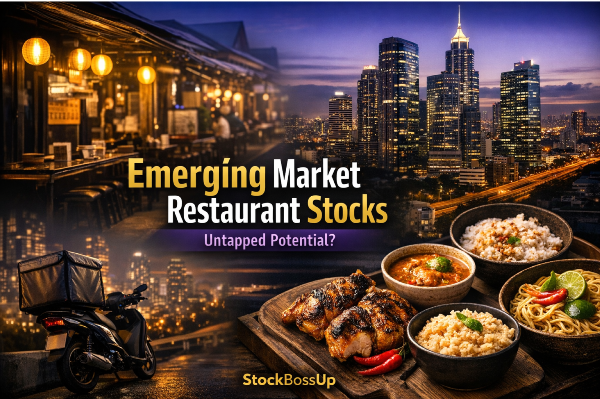
One unique fact is that some emerging markets have more food delivery riders per capita than the United States. This changes how restaurants grow and how they earn money. Investors who ignore this trend miss a major part of the story.
How Are Local Food Cultures Shaping Restaurant Chains?
Food culture plays a huge role in how chains expand. In many emerging markets, people still prefer local dishes over global brands. This does not hurt growth. It actually helps. Local chains often scale faster because they match the tastes of the region.
For example, noodle shops in Southeast Asia grow quickly because they fit daily eating habits. In Latin America, grilled chicken chains expand fast due to strong demand for affordable protein. In parts of Africa, quick‑serve rice and stew restaurants are becoming popular because they offer fast meals at low prices.
These trends show that growth is not random. It follows cultural patterns. Investors who understand these patterns can spot strong companies early.
Which Economic Forces Matter Most for Restaurant Stocks?
Restaurant stocks in emerging markets depend on a few key forces:
- Rising middle‑class income
- Urbanization
- Growth of malls and shopping centers
- Expansion of delivery apps
- Stable food supply chains
Urbanization is especially important. When people move to cities, they eat out more. They also order delivery more often. This creates steady demand for quick‑serve and fast‑casual chains.
Another force is the rise of digital payments. In some emerging markets, mobile wallets are more common than credit cards. This makes it easier for restaurants to collect payments and track customer behavior.
How Do Delivery Apps Change the Competitive Landscape?
Delivery apps are not just a side feature. They are a major driver of growth. In some regions, more than half of restaurant orders come from delivery platforms. This changes how restaurants operate. They need smaller dining spaces. They can open more locations with lower costs. They can reach customers far from their physical stores.
Delivery apps also help new brands grow faster. A small kitchen can become a national name in a short time. This creates more competition but also more opportunity.
Below is a simple comparison of delivery‑driven restaurant growth across regions.
| Region |
Delivery Share of Orders |
Impact on Restaurant Growth |
| Southeast Asia |
High |
Faster expansion of small chains |
| Latin America |
Medium |
Strong boost for mid‑priced brands |
| Middle East |
High |
Growth of delivery‑only kitchens |
| Africa |
Low to Medium |
Early‑stage growth potential |
Why Do Some Chains Scale Faster Than Others?
Some chains scale faster because they understand the local market better. They choose locations that match daily routines. They offer meals that fit local budgets. They use digital tools to manage supply chains.
Fast‑scaling chains often share these traits:
- Simple menus
- Low build‑out costs
- Strong delivery partnerships
- Local sourcing
- Flexible pricing
A second unique fact is that some emerging market chains use AI to predict daily ingredient needs. This reduces waste and increases profit margins. Many investors do not realize how advanced these companies have become.
What Risks Do Investors Often Overlook?
Emerging markets offer big rewards, but they also come with risks. Some risks are obvious. Others are easy to miss.
Common risks include:
- Currency swings
- Political changes
- Food inflation
- Weak supply chains
- Limited access to capital
But the most overlooked risk is brand fatigue. When a chain grows too fast, customers lose interest. This happens more often in emerging markets because trends shift quickly. A brand that is popular today may not be popular next year.
Below is a simple breakdown of risk levels across different types of restaurant chains.
| Chain Type |
Risk Level |
Reason |
| Fast Casual |
Medium |
Higher costs but strong demand |
| Quick Serve |
Low to Medium |
Stable demand, lower margins |
| Delivery‑Only |
High |
Fierce competition |
| Premium Dining |
High |
Sensitive to economic swings |
Why Are Global Brands Expanding More Slowly?
Global brands used to dominate emerging markets. Today, they face more competition from local chains. Local brands understand flavors, pricing, and culture better. They also adapt faster.
Global brands face challenges such as:
- Higher operating costs
- Slower menu changes
- Less flexibility in pricing
- Complex supply chains
This does not mean global brands cannot grow. It means they must adjust their strategies. Some are doing this by offering smaller stores, local menu items, and delivery‑focused models.
How Do Investors Identify the Strongest Opportunities?
The strongest opportunities often come from chains that combine local flavor with modern operations. These companies use data to track demand. They build efficient kitchens. They keep menus simple. They expand in areas with strong foot traffic and high delivery demand.
Investors should look for:
- Consistent same‑store sales growth
- Strong digital presence
- Local sourcing strategies
- Clear expansion plans
- Healthy balance sheets
Below is a sample comparison of traits found in high‑performing emerging market restaurant companies.
| Trait |
Why It Matters |
| Local menu focus |
Matches cultural demand |
| Digital ordering |
Drives repeat sales |
| Low build‑out cost |
Faster expansion |
| Strong supply chain |
Stable margins |
| Delivery partnerships |
Wider reach |
What Role Does the Middle Class Play in Long‑Term Growth?
The middle class is the engine of restaurant growth. As incomes rise, people spend more on convenience. They eat out more often. They try new foods. They value speed and comfort.
In many emerging markets, the middle class is expanding faster than in developed countries. This creates long‑term demand for affordable dining options. It also supports the rise of new restaurant formats, such as food halls, hybrid kitchens, and small‑footprint stores.
Why Are Food Prices So Important?
Food prices affect restaurant margins. When food inflation rises, restaurants must raise prices or reduce portion sizes. In emerging markets, food inflation can be unpredictable. This makes cost control essential.
Chains that source ingredients locally often perform better. They avoid high import costs. They also build stronger relationships with local suppliers.
Below is a simple view of how food inflation affects different restaurant types.
| Restaurant Type |
Impact of Food Inflation |
| Quick Serve |
Medium |
| Fast Casual |
High |
| Delivery‑Only |
Medium |
| Premium Dining |
High |
How Do Cultural Shifts Shape the Future of Dining?
Cultural shifts are shaping the future of dining in emerging markets. Younger consumers want fast service. They want digital ordering. They want meals that fit busy lifestyles. They also want healthier options.
This creates opportunities for chains that offer:
- Fresh ingredients
- Transparent pricing
- Quick service
- Mobile ordering
- Flexible portions
Some chains are even offering plant‑based meals to attract younger customers. This trend is still early, but it is growing.
What Makes Emerging Market Restaurant Stocks So Promising?
The promise comes from three forces working together:
- Growing middle‑class demand
- Rapid urbanization
- Digital transformation
These forces create a strong foundation for long‑term growth. They also help restaurant chains scale faster than in many developed markets.
Investors who understand these forces can identify companies with real staying power.
How Can Investors Avoid the Most Common Mistakes?
Investors often make mistakes because they rely on old models. They look at emerging markets through the lens of developed markets. This leads to poor decisions.
To avoid mistakes, investors should:
- Study local food culture
- Track delivery trends
- Watch currency movements
- Compare chains within the same region
- Look for companies with strong digital tools
Below is a simple checklist investors can use.
| Checklist Item |
Why It Helps |
| Local menu fit |
Predicts long‑term demand |
| Delivery strength |
Supports fast growth |
| Cost control |
Protects margins |
| Expansion strategy |
Shows future potential |
| Digital tools |
Improves efficiency |
What Is the Real Solution to the Problem Introduced at the Start?
The problem in the introduction was that investors struggle to judge the real strength of emerging market restaurant stocks. The solution is not a single metric. It is a mindset shift. Investors must look beyond short‑term noise. They must study how culture, technology, and economics shape demand.
When investors understand these forces, the signals become clear. They can see which companies are building lasting value. They can spot early winners. They can avoid chains that grow too fast or rely on trends that fade.
Emerging market restaurant stocks are not just untapped potential. They are a window into the future of global dining. The investors who learn how to read these markets today will be the ones who benefit most tomorrow.
🚀 Expand Your Edge: Elite Restaurant & Consumer Insights
Ready to dominate the sector? Our Investor Intelligence Hub is designed to help you navigate the complex world of restaurant equities with precision. From deep-dive fundamental analysis to macroeconomic strategy, explore our curated silos below to find your next big winner.
🍽️ Sector Fundamentals & Top Picks
📊 Deep-Dive Financial Analysis
🧠 Strategic Operations & Economics
🌍 Macro, Risk & Global Trends
💡 Investor Psychology & Behavioral Trends
🔍 Advanced Intelligence









Emerging markets are changing fast. Cities are growing. Middle‑class families are spending more on food away from home. Yet many investors still overlook restaurant stocks in these regions. The problem is simple: most people do not know how to judge the real strength of these companies. They see growth but cannot tell if it will last. The answer becomes clear only when you understand how these markets behave over time.
Emerging Market Restaurant Stocks
Why Do Investors Struggle to Read Growth Signals?
Investors often look at emerging markets and see noise. Sales rise one year and fall the next. Currency swings make earnings look unstable. New chains open fast, but many close just as quickly. This makes it hard to know which companies are building long‑term value.
But the real issue is not the noise. It is the lack of clear signals. Many investors use the same tools they use for mature markets. Those tools do not always work here. Consumer habits shift faster. Competition changes overnight. A brand can go from unknown to dominant in a few years.
One unique fact is that some emerging markets have more food delivery riders per capita than the United States. This changes how restaurants grow and how they earn money. Investors who ignore this trend miss a major part of the story.
How Are Local Food Cultures Shaping Restaurant Chains?
Food culture plays a huge role in how chains expand. In many emerging markets, people still prefer local dishes over global brands. This does not hurt growth. It actually helps. Local chains often scale faster because they match the tastes of the region.
For example, noodle shops in Southeast Asia grow quickly because they fit daily eating habits. In Latin America, grilled chicken chains expand fast due to strong demand for affordable protein. In parts of Africa, quick‑serve rice and stew restaurants are becoming popular because they offer fast meals at low prices.
These trends show that growth is not random. It follows cultural patterns. Investors who understand these patterns can spot strong companies early.
Which Economic Forces Matter Most for Restaurant Stocks?
Restaurant stocks in emerging markets depend on a few key forces:
Urbanization is especially important. When people move to cities, they eat out more. They also order delivery more often. This creates steady demand for quick‑serve and fast‑casual chains.
Another force is the rise of digital payments. In some emerging markets, mobile wallets are more common than credit cards. This makes it easier for restaurants to collect payments and track customer behavior.
How Do Delivery Apps Change the Competitive Landscape?
Delivery apps are not just a side feature. They are a major driver of growth. In some regions, more than half of restaurant orders come from delivery platforms. This changes how restaurants operate. They need smaller dining spaces. They can open more locations with lower costs. They can reach customers far from their physical stores.
Delivery apps also help new brands grow faster. A small kitchen can become a national name in a short time. This creates more competition but also more opportunity.
Below is a simple comparison of delivery‑driven restaurant growth across regions.
Why Do Some Chains Scale Faster Than Others?
Some chains scale faster because they understand the local market better. They choose locations that match daily routines. They offer meals that fit local budgets. They use digital tools to manage supply chains.
Fast‑scaling chains often share these traits:
A second unique fact is that some emerging market chains use AI to predict daily ingredient needs. This reduces waste and increases profit margins. Many investors do not realize how advanced these companies have become.
What Risks Do Investors Often Overlook?
Emerging markets offer big rewards, but they also come with risks. Some risks are obvious. Others are easy to miss.
Common risks include:
But the most overlooked risk is brand fatigue. When a chain grows too fast, customers lose interest. This happens more often in emerging markets because trends shift quickly. A brand that is popular today may not be popular next year.
Below is a simple breakdown of risk levels across different types of restaurant chains.
Why Are Global Brands Expanding More Slowly?
Global brands used to dominate emerging markets. Today, they face more competition from local chains. Local brands understand flavors, pricing, and culture better. They also adapt faster.
Global brands face challenges such as:
This does not mean global brands cannot grow. It means they must adjust their strategies. Some are doing this by offering smaller stores, local menu items, and delivery‑focused models.
How Do Investors Identify the Strongest Opportunities?
The strongest opportunities often come from chains that combine local flavor with modern operations. These companies use data to track demand. They build efficient kitchens. They keep menus simple. They expand in areas with strong foot traffic and high delivery demand.
Investors should look for:
Below is a sample comparison of traits found in high‑performing emerging market restaurant companies.
What Role Does the Middle Class Play in Long‑Term Growth?
The middle class is the engine of restaurant growth. As incomes rise, people spend more on convenience. They eat out more often. They try new foods. They value speed and comfort.
In many emerging markets, the middle class is expanding faster than in developed countries. This creates long‑term demand for affordable dining options. It also supports the rise of new restaurant formats, such as food halls, hybrid kitchens, and small‑footprint stores.
Why Are Food Prices So Important?
Food prices affect restaurant margins. When food inflation rises, restaurants must raise prices or reduce portion sizes. In emerging markets, food inflation can be unpredictable. This makes cost control essential.
Chains that source ingredients locally often perform better. They avoid high import costs. They also build stronger relationships with local suppliers.
Below is a simple view of how food inflation affects different restaurant types.
How Do Cultural Shifts Shape the Future of Dining?
Cultural shifts are shaping the future of dining in emerging markets. Younger consumers want fast service. They want digital ordering. They want meals that fit busy lifestyles. They also want healthier options.
This creates opportunities for chains that offer:
Some chains are even offering plant‑based meals to attract younger customers. This trend is still early, but it is growing.
What Makes Emerging Market Restaurant Stocks So Promising?
The promise comes from three forces working together:
These forces create a strong foundation for long‑term growth. They also help restaurant chains scale faster than in many developed markets.
Investors who understand these forces can identify companies with real staying power.
How Can Investors Avoid the Most Common Mistakes?
Investors often make mistakes because they rely on old models. They look at emerging markets through the lens of developed markets. This leads to poor decisions.
To avoid mistakes, investors should:
Below is a simple checklist investors can use.
What Is the Real Solution to the Problem Introduced at the Start?
The problem in the introduction was that investors struggle to judge the real strength of emerging market restaurant stocks. The solution is not a single metric. It is a mindset shift. Investors must look beyond short‑term noise. They must study how culture, technology, and economics shape demand.
When investors understand these forces, the signals become clear. They can see which companies are building lasting value. They can spot early winners. They can avoid chains that grow too fast or rely on trends that fade.
Emerging market restaurant stocks are not just untapped potential. They are a window into the future of global dining. The investors who learn how to read these markets today will be the ones who benefit most tomorrow.
🚀 Expand Your Edge: Elite Restaurant & Consumer Insights
Ready to dominate the sector? Our Investor Intelligence Hub is designed to help you navigate the complex world of restaurant equities with precision. From deep-dive fundamental analysis to macroeconomic strategy, explore our curated silos below to find your next big winner.
🍽️ Sector Fundamentals & Top Picks
📊 Deep-Dive Financial Analysis
🧠 Strategic Operations & Economics
🌍 Macro, Risk & Global Trends
💡 Investor Psychology & Behavioral Trends
🔍 Advanced Intelligence