Key Takeaways
🚗 South Korea remains a global auto manufacturing powerhouse driven by exports
South Korea’s auto industry is built on strong export performance, advanced infrastructure, and globally recognized brands. Markets like the United States and Europe play a critical role in sustaining production and revenue, making export strength a core driver of long-term success.
🔋 Electric vehicles and battery leadership are shaping future growth
South Korea’s investment in electric vehicles and battery technology is a major competitive advantage. Companies like LG Energy Solution and Samsung SDI support automakers with advanced battery solutions, positioning the country as a key player in the global EV transition.
⚙️ Rising costs and global competition are increasing pressure
Higher labor costs, strong unions, and growing competition from countries like China and the United States are challenging South Korea’s position. Automakers must balance cost control with innovation to stay competitive in a rapidly evolving global market.
🌐 Innovation and global expansion are critical for staying competitive
To maintain leadership, South Korean automakers are investing in new technologies, expanding production overseas, and forming strategic partnerships. Success will depend on how quickly they adapt to industry shifts, especially in EVs, automation, and connected vehicles.
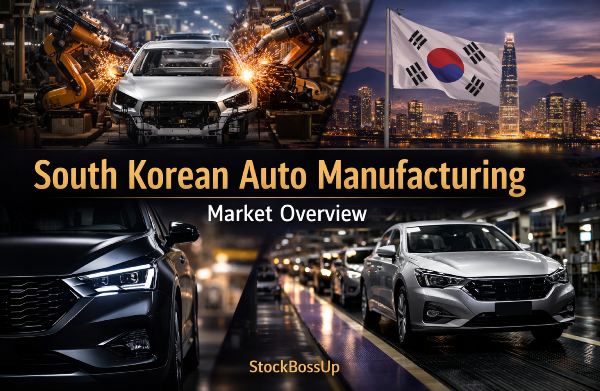
South Korean Auto Manufacturing Market Overview
The auto industry in South Korea looks strong from the outside. Brands are global. Exports are steady. Technology is advanced. But there is a hidden problem. Growth is not as simple as it seems.
Costs are rising. Competition is intense. New players are entering fast. At the same time, the shift to electric vehicles is changing how cars are made. Many people assume South Korea will keep winning because it has in the past. That assumption may miss what is really happening.
The real question is not whether South Korea is strong today. It is whether its auto industry can adapt fast enough to stay strong tomorrow.
Why Has South Korea Been So Successful?
South Korea built its auto industry with focus and speed. In the 1970s and 1980s, the country invested heavily in manufacturing. It created strong partnerships between government and business.
Companies like Hyundai Motor Company and Kia Corporation grew quickly. They focused on exports early. They improved quality year after year.
By the 2000s, South Korean cars were known for value and reliability. They were cheaper than many competitors but still well made.
This balance helped them expand into the United States, Europe, and beyond.
What Makes South Korea Different From Other Auto Hubs?
South Korea has a unique structure. A few large companies dominate the market. These companies control many parts of the supply chain.
This system helps with speed and coordination. Decisions can be made quickly. Production can scale fast.
There is also strong investment in research and development. South Korea spends a high share of its GDP on innovation.
The country also has advanced infrastructure. Ports, roads, and logistics systems are efficient.
Why Is Export Power So Important?
South Korea depends heavily on exports. The domestic market is not large enough to support the entire industry.
Cars made in South Korea are shipped worldwide. The United States is a key market. Europe is also important.
This global focus creates both strength and risk.
If demand drops in one region, it can hurt production. If trade rules change, costs can rise.
Still, export strength has been a major driver of growth.
| Factor |
South Korea Strength |
Impact on Industry |
| Export Focus |
Very high |
Global reach |
| Infrastructure |
Advanced |
Efficient logistics |
| R&D Investment |
Strong |
Innovation growth |
| Market Size |
Moderate |
Export dependence |
How Are Electric Vehicles Changing the Market?
Electric vehicles (EVs) are reshaping the industry. South Korea is investing heavily in EV production.
Companies like Hyundai and Kia are launching new electric models. They are competing with global leaders.
Battery technology is a key advantage. South Korea is home to major battery makers like LG Energy Solution and Samsung SDI.
This gives the country an edge in EV production.
EVs also simplify manufacturing. They have fewer parts than gas-powered cars. This can lower costs over time.
Why Are Global Competitors Catching Up?
South Korea is not alone in this shift.
China is growing fast in EV production. Domestic companies are expanding globally.
The United States is investing heavily in EV factories and technology.
Germany continues to lead in engineering and premium vehicles.
This creates pressure on South Korean automakers.
They must compete on price, quality, and innovation at the same time.
What Role Does Labor Play Today?
Labor has always been important in South Korea’s auto industry.
Workers are skilled and productive. But wages are higher than in many emerging markets.
Labor unions are also strong. This can lead to strikes and production delays.
Companies are responding with automation. Robots and smart systems are becoming more common.
This reduces reliance on manual labor.
Are Supply Chains a Strength or Weakness?
South Korea has a well-developed supply chain. Many parts are produced locally.
This reduces dependence on imports. It also improves efficiency.
However, global disruptions can still have an impact.
For example, semiconductor shortages affected production in recent years.
This showed that even strong supply chains have limits.
| Supply Chain Element |
Strength Level |
Key Benefit |
| Local suppliers |
High |
Faster production |
| Electronics |
Advanced |
Tech integration |
| Global sourcing |
Moderate |
Flexibility |
| Risk exposure |
Present |
Vulnerability to shocks |
Why Is Innovation So Critical Right Now?
Innovation is the key to staying competitive.
South Korean automakers are investing in:
- Electric vehicles
- Autonomous driving
- Connected car technology
These areas will define the future of the industry.
Without strong innovation, companies risk falling behind.
South Korea’s tech ecosystem supports this push. It includes strong electronics and software sectors.
How Does Government Policy Shape the Industry?
The government plays a major role.
It supports research and development. It offers incentives for EV adoption. It also sets regulations.
Policies can speed up or slow down growth.
South Korea is pushing for greener transportation. This aligns with global trends.
Government support helps companies transition to new technologies.
What Are the Biggest Risks Ahead?
The industry faces several risks.
Global competition is increasing. Costs are rising. Demand can shift quickly.
Trade tensions can also affect exports.
There is also the risk of falling behind in new technology.
If companies fail to innovate, they may lose market share.
How Are South Korean Brands Adapting?
South Korean automakers are not standing still.
They are expanding production overseas. This reduces reliance on exports from South Korea.
They are also focusing on design and branding. Cars are now seen as stylish and modern.
Electric vehicle lineups are growing quickly.
These changes help them stay competitive.
Why Do Many People Misjudge This Market?
Many people assume past success guarantees future results.
South Korea has been strong for decades. That creates confidence.
But the industry is changing fast.
New technologies, new competitors, and new rules are reshaping the market.
Understanding these changes is key.
What Role Do Partnerships Play?
Partnerships are becoming more important.
Automakers are working with tech companies. They are also forming alliances with battery producers.
These partnerships help share costs and speed up innovation.
They also reduce risk.
Collaboration is becoming a core strategy.
| Strategy Type |
Purpose |
Outcome |
| Partnerships |
Share resources |
Faster innovation |
| Overseas expansion |
Reduce export risk |
Market stability |
| EV investment |
Future growth |
Competitive positioning |
| Automation |
Lower labor reliance |
Cost control |
How Fast Is the Industry Changing?
The pace of change is rapid.
Electric vehicles are gaining market share each year.
Technology cycles are getting shorter.
Consumer expectations are evolving.
One detail stands out: South Korea produces millions of vehicles each year, yet a growing share now comes from overseas plants owned by its own companies.
Another point shows the speed of change. Some South Korean automakers can now develop a new vehicle platform in under three years, a process that once took nearly twice as long.
What Does This Mean for Global Markets?
South Korea remains a major player.
Its companies compete in many regions. They offer a wide range of vehicles.
From budget models to premium EVs, they cover multiple segments.
This flexibility helps them adapt to changing demand.
Global markets benefit from this competition. It drives innovation and keeps prices competitive.
Why Is Brand Perception So Important?
Brand perception has improved over time.
South Korean cars were once seen as low-cost options.
Now they are seen as reliable and well-designed.
This shift helps increase sales and margins.
It also allows companies to compete with premium brands.
Where Is the Real Opportunity?
The biggest opportunity lies in the transition to new technology.
Electric vehicles, software, and mobility services are key areas.
South Korea has strong capabilities in these fields.
Battery technology is a major advantage.
Companies that lead in these areas can shape the future.
So What Solves the Original Problem?
At the start, we asked a key question. Can South Korea’s auto industry keep its strength in a changing world?
The answer comes down to adaptation.
The industry must balance its strengths with new demands. It must invest in innovation while managing costs. It must compete globally while staying flexible.
South Korea already has many advantages. Strong companies, advanced technology, and global reach.
The solution is not to rely on past success. It is to move faster than the changes happening around it.
Those who understand this shift will see where the real growth is coming from. Those who do not may miss how quickly the market is evolving.


Key Takeaways
🚗 South Korea remains a global auto manufacturing powerhouse driven by exports
South Korea’s auto industry is built on strong export performance, advanced infrastructure, and globally recognized brands. Markets like the United States and Europe play a critical role in sustaining production and revenue, making export strength a core driver of long-term success.
🔋 Electric vehicles and battery leadership are shaping future growth
South Korea’s investment in electric vehicles and battery technology is a major competitive advantage. Companies like LG Energy Solution and Samsung SDI support automakers with advanced battery solutions, positioning the country as a key player in the global EV transition.
⚙️ Rising costs and global competition are increasing pressure
Higher labor costs, strong unions, and growing competition from countries like China and the United States are challenging South Korea’s position. Automakers must balance cost control with innovation to stay competitive in a rapidly evolving global market.
🌐 Innovation and global expansion are critical for staying competitive
To maintain leadership, South Korean automakers are investing in new technologies, expanding production overseas, and forming strategic partnerships. Success will depend on how quickly they adapt to industry shifts, especially in EVs, automation, and connected vehicles.
South Korean Auto Manufacturing Market Overview
The auto industry in South Korea looks strong from the outside. Brands are global. Exports are steady. Technology is advanced. But there is a hidden problem. Growth is not as simple as it seems.
Costs are rising. Competition is intense. New players are entering fast. At the same time, the shift to electric vehicles is changing how cars are made. Many people assume South Korea will keep winning because it has in the past. That assumption may miss what is really happening.
The real question is not whether South Korea is strong today. It is whether its auto industry can adapt fast enough to stay strong tomorrow.
Why Has South Korea Been So Successful?
South Korea built its auto industry with focus and speed. In the 1970s and 1980s, the country invested heavily in manufacturing. It created strong partnerships between government and business.
Companies like Hyundai Motor Company and Kia Corporation grew quickly. They focused on exports early. They improved quality year after year.
By the 2000s, South Korean cars were known for value and reliability. They were cheaper than many competitors but still well made.
This balance helped them expand into the United States, Europe, and beyond.
What Makes South Korea Different From Other Auto Hubs?
South Korea has a unique structure. A few large companies dominate the market. These companies control many parts of the supply chain.
This system helps with speed and coordination. Decisions can be made quickly. Production can scale fast.
There is also strong investment in research and development. South Korea spends a high share of its GDP on innovation.
The country also has advanced infrastructure. Ports, roads, and logistics systems are efficient.
Why Is Export Power So Important?
South Korea depends heavily on exports. The domestic market is not large enough to support the entire industry.
Cars made in South Korea are shipped worldwide. The United States is a key market. Europe is also important.
This global focus creates both strength and risk.
If demand drops in one region, it can hurt production. If trade rules change, costs can rise.
Still, export strength has been a major driver of growth.
How Are Electric Vehicles Changing the Market?
Electric vehicles (EVs) are reshaping the industry. South Korea is investing heavily in EV production.
Companies like Hyundai and Kia are launching new electric models. They are competing with global leaders.
Battery technology is a key advantage. South Korea is home to major battery makers like LG Energy Solution and Samsung SDI.
This gives the country an edge in EV production.
EVs also simplify manufacturing. They have fewer parts than gas-powered cars. This can lower costs over time.
Why Are Global Competitors Catching Up?
South Korea is not alone in this shift.
China is growing fast in EV production. Domestic companies are expanding globally.
The United States is investing heavily in EV factories and technology.
Germany continues to lead in engineering and premium vehicles.
This creates pressure on South Korean automakers.
They must compete on price, quality, and innovation at the same time.
What Role Does Labor Play Today?
Labor has always been important in South Korea’s auto industry.
Workers are skilled and productive. But wages are higher than in many emerging markets.
Labor unions are also strong. This can lead to strikes and production delays.
Companies are responding with automation. Robots and smart systems are becoming more common.
This reduces reliance on manual labor.
Are Supply Chains a Strength or Weakness?
South Korea has a well-developed supply chain. Many parts are produced locally.
This reduces dependence on imports. It also improves efficiency.
However, global disruptions can still have an impact.
For example, semiconductor shortages affected production in recent years.
This showed that even strong supply chains have limits.
Why Is Innovation So Critical Right Now?
Innovation is the key to staying competitive.
South Korean automakers are investing in:
These areas will define the future of the industry.
Without strong innovation, companies risk falling behind.
South Korea’s tech ecosystem supports this push. It includes strong electronics and software sectors.
How Does Government Policy Shape the Industry?
The government plays a major role.
It supports research and development. It offers incentives for EV adoption. It also sets regulations.
Policies can speed up or slow down growth.
South Korea is pushing for greener transportation. This aligns with global trends.
Government support helps companies transition to new technologies.
What Are the Biggest Risks Ahead?
The industry faces several risks.
Global competition is increasing. Costs are rising. Demand can shift quickly.
Trade tensions can also affect exports.
There is also the risk of falling behind in new technology.
If companies fail to innovate, they may lose market share.
How Are South Korean Brands Adapting?
South Korean automakers are not standing still.
They are expanding production overseas. This reduces reliance on exports from South Korea.
They are also focusing on design and branding. Cars are now seen as stylish and modern.
Electric vehicle lineups are growing quickly.
These changes help them stay competitive.
Why Do Many People Misjudge This Market?
Many people assume past success guarantees future results.
South Korea has been strong for decades. That creates confidence.
But the industry is changing fast.
New technologies, new competitors, and new rules are reshaping the market.
Understanding these changes is key.
What Role Do Partnerships Play?
Partnerships are becoming more important.
Automakers are working with tech companies. They are also forming alliances with battery producers.
These partnerships help share costs and speed up innovation.
They also reduce risk.
Collaboration is becoming a core strategy.
How Fast Is the Industry Changing?
The pace of change is rapid.
Electric vehicles are gaining market share each year.
Technology cycles are getting shorter.
Consumer expectations are evolving.
One detail stands out: South Korea produces millions of vehicles each year, yet a growing share now comes from overseas plants owned by its own companies.
Another point shows the speed of change. Some South Korean automakers can now develop a new vehicle platform in under three years, a process that once took nearly twice as long.
What Does This Mean for Global Markets?
South Korea remains a major player.
Its companies compete in many regions. They offer a wide range of vehicles.
From budget models to premium EVs, they cover multiple segments.
This flexibility helps them adapt to changing demand.
Global markets benefit from this competition. It drives innovation and keeps prices competitive.
Why Is Brand Perception So Important?
Brand perception has improved over time.
South Korean cars were once seen as low-cost options.
Now they are seen as reliable and well-designed.
This shift helps increase sales and margins.
It also allows companies to compete with premium brands.
Where Is the Real Opportunity?
The biggest opportunity lies in the transition to new technology.
Electric vehicles, software, and mobility services are key areas.
South Korea has strong capabilities in these fields.
Battery technology is a major advantage.
Companies that lead in these areas can shape the future.
So What Solves the Original Problem?
At the start, we asked a key question. Can South Korea’s auto industry keep its strength in a changing world?
The answer comes down to adaptation.
The industry must balance its strengths with new demands. It must invest in innovation while managing costs. It must compete globally while staying flexible.
South Korea already has many advantages. Strong companies, advanced technology, and global reach.
The solution is not to rely on past success. It is to move faster than the changes happening around it.
Those who understand this shift will see where the real growth is coming from. Those who do not may miss how quickly the market is evolving.