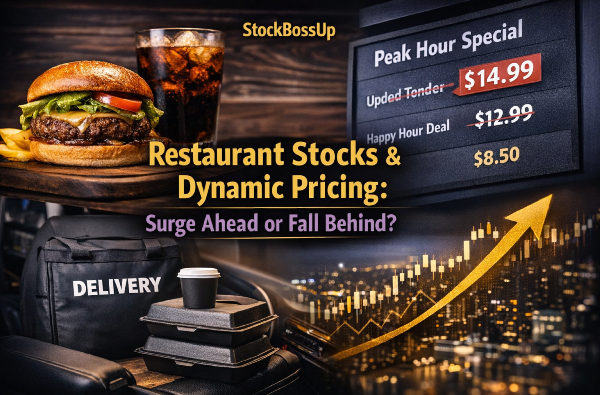
Restaurants are entering a new era where prices can shift by the hour. Some brands see this as a path to higher margins. Others fear it could push customers away. Investors are watching closely because the stakes are high. A single change in pricing strategy can reshape traffic, loyalty, and long‑term value. The challenge is simple to state but hard to solve: how can restaurants raise revenue without losing trust? The answer is not obvious, and the real impact on stock performance becomes clear only after looking deeper into how dynamic pricing works.
Why Are Restaurants Turning to Dynamic Pricing Now?
Restaurants have always adjusted prices over time. But the new wave of dynamic pricing is different. It uses real‑time data to shift prices based on demand, weather, traffic, or even local events. This approach mirrors what airlines and hotels have done for years. The difference is that restaurant customers are not used to seeing prices move so quickly.
Several forces are pushing brands toward this model. Labor costs are rising. Food inflation remains unpredictable. Delivery platforms take large fees. Investors want stronger margins. Dynamic pricing promises a way to balance these pressures without cutting quality or shrinking portions.
Some chains are testing small price bumps during peak hours. Others are experimenting with discounts during slow periods. The goal is to smooth demand and increase revenue per minute. This matters because many restaurants now track throughput as closely as they track sales.
How Does Surge Pricing Actually Work in Restaurants?
Dynamic pricing can take many forms. Some restaurants use digital menu boards that update based on time of day. Others rely on app‑based pricing that changes for mobile orders. A few brands are exploring AI‑driven systems that adjust prices automatically.
The core idea is simple. When demand spikes, prices rise slightly. When demand drops, prices fall. This helps restaurants manage labor, reduce wait times, and improve order flow. It also encourages customers to shift their visits to less busy times.
One unique fact is that some restaurants have found that even a small price drop during slow hours can increase traffic enough to raise total daily revenue. Another is that certain chains discovered that customers are more sensitive to price increases on drinks than on entrées, even when the increase is the same amount.
To understand how this affects investors, it helps to look at how dynamic pricing changes the revenue mix.
Revenue Mix Shifts Under Dynamic Pricing
| Metric |
Traditional Pricing |
Dynamic Pricing |
| Average Ticket |
Stable |
More variable |
| Peak‑Hour Sales |
High congestion |
Higher revenue per order |
| Off‑Peak Sales |
Often weak |
Improved through discounts |
| Labor Efficiency |
Hard to optimize |
Easier to match demand |
| Customer Wait Times |
Longer during rush |
More balanced |
Why Do Some Customers Push Back Against Surge Pricing?
Not everyone welcomes dynamic pricing. Some customers feel it is unfair. They worry that prices will rise when they need food the most. Others fear that restaurants will use the system to raise prices without limits. This creates a tension between short‑term gains and long‑term loyalty.
Restaurants must walk a fine line. If prices rise too fast, customers may switch to competitors. If prices rise too slowly, the system may not deliver enough margin improvement to satisfy investors. The challenge is finding a balance that feels fair.
Customer psychology plays a major role. People accept surge pricing for flights because they expect it. They accept it for hotels because they understand supply is limited. But restaurants feel different. Food is personal. People notice small changes. They compare prices across visits. This makes transparency essential.
Some brands are testing “smart discounts” instead of “smart surges.” These discounts reward customers for ordering early or picking up instead of using delivery. This approach reduces backlash while still improving margins.
Read More: The Top Restaurant Stocks
What Happens When Dynamic Pricing Meets Delivery Apps?
Delivery apps already use forms of dynamic pricing. They adjust fees based on demand, driver availability, and distance. When restaurants add their own dynamic pricing on top, the total cost can rise quickly. This creates a risk that customers will blame the restaurant, even if the app caused most of the increase.
Restaurants must decide whether to sync their pricing with delivery platforms or keep them separate. Syncing creates consistency. Keeping them separate allows restaurants to protect in‑store customers from app‑driven surges.
Investors pay close attention to this because delivery now accounts for a large share of revenue for many chains. If dynamic pricing improves delivery margins, stocks may benefit. If it drives customers away, the impact could be negative.
Delivery vs. Dine‑In Pricing Trends
| Category |
Dine‑In |
Delivery |
| Price Sensitivity |
Moderate |
High |
| Cost to Serve |
Lower |
Higher |
| Impact of Surge Pricing |
Noticeable |
Very noticeable |
| Customer Loyalty Risk |
Medium |
High |
Why Do Some Restaurants Benefit More Than Others?
Not all restaurants gain equally from dynamic pricing. Fast‑casual chains with strong digital adoption tend to benefit the most. They have the technology to adjust prices quickly. They also have customers who are used to ordering through apps.
Drive‑thru chains can also benefit because they can manage line length more effectively. When lines get too long, a small price bump can slow demand just enough to keep operations smooth. This reduces errors and improves throughput.
Full‑service restaurants face more challenges. Their customers expect stable prices. They also spend more time in the restaurant, which makes price changes more noticeable. Still, some full‑service brands are testing dynamic pricing for reservations rather than menu items. This approach mirrors what hotels do with room rates.
The brands that benefit most are those with strong loyalty programs. These programs allow restaurants to offer personalized discounts that feel like rewards rather than price manipulation.
What Risks Do Investors Need to Watch?
Dynamic pricing can boost margins, but it also introduces new risks. Customer backlash is the most obvious. But there are deeper risks that investors must consider.
One risk is regulatory attention. Some regions may view surge pricing as unfair during emergencies or extreme weather. Another risk is technology failure. If a pricing system updates too often or at the wrong time, it can confuse customers and staff.
There is also the risk of brand damage. A single viral post about a price spike can spread quickly. Investors must watch how brands communicate their pricing strategy. Clear messaging can reduce confusion and protect loyalty.
Finally, there is the risk of over‑optimization. If restaurants rely too heavily on algorithms, they may lose the human touch that customers value. This can weaken the emotional connection that drives repeat visits.
Key Investor Risk Indicators
| Risk Type |
Impact Level |
Notes |
| Customer Backlash |
High |
Can reduce traffic quickly |
| Regulatory Scrutiny |
Medium |
Varies by region |
| Tech Reliability |
Medium |
System errors can cause chaos |
| Brand Perception |
High |
Hard to repair once damaged |
| Competitive Response |
Medium |
Rivals may avoid surge pricing |
Why Do Some Investors See Dynamic Pricing as a Long‑Term Advantage?
Despite the risks, many investors believe dynamic pricing will become a standard tool in the restaurant industry. It offers a way to manage rising costs without cutting quality. It also helps restaurants use data more effectively.
Dynamic pricing can reveal patterns that were invisible before. For example, some restaurants discovered that demand spikes not only during lunch and dinner but also during short “micro‑peaks” tied to school schedules or local events. Adjusting prices during these micro‑peaks can improve margins without upsetting customers.
Another advantage is that dynamic pricing can help restaurants test new menu items. By adjusting prices in real time, they can see how sensitive customers are to different price points. This helps brands make smarter decisions about permanent menu changes.
For investors, the biggest appeal is scalability. Once a dynamic pricing system is in place, it can be rolled out across hundreds or thousands of locations with minimal added cost.
What Does the Future of Restaurant Pricing Look Like?
The future of restaurant pricing will likely blend dynamic pricing with personalization. Instead of raising prices for everyone during peak hours, restaurants may offer targeted discounts to specific customers. This approach feels more fair and reduces backlash.
AI will play a major role. It will analyze patterns in traffic, weather, and customer behavior. It will help restaurants adjust prices in ways that feel natural rather than abrupt. It may even help restaurants predict demand before it happens.
Some experts believe that dynamic pricing will become invisible. Customers will not see prices change. Instead, they will receive personalized offers that shift based on demand. This approach keeps the benefits of dynamic pricing while avoiding the negative perception of surge pricing.
The final outcome depends on how well restaurants balance fairness, transparency, and profitability. The brands that get this balance right may see stronger stock performance. Those that misjudge customer sentiment may face setbacks.
So Will Surge Pricing Boost or Break Investor Returns?
The answer depends on execution. Dynamic pricing can boost returns when used with care. It can raise revenue, improve labor efficiency, and smooth demand. But it can also damage trust if used too aggressively.
Investors should watch how brands communicate their pricing strategy. They should monitor customer sentiment, loyalty trends, and digital adoption rates. They should also look at how well restaurants use data to guide decisions.
Dynamic pricing is not a magic solution. It is a tool. When used wisely, it can strengthen margins and support long‑term growth. When used poorly, it can push customers away. The brands that succeed will be those that treat pricing as part of the customer experience, not just a revenue lever.
📈 Elevate Your Edge: Essential Restaurant Stock Intelligence
Looking to sharpen your investment strategy? Dive deeper into the mechanics of the hospitality market with our curated deep dives. From labor economics to the frontier of AI automation, these insights are engineered to help you navigate the complexities of restaurant stock performance.
🔍 Explore More Insights
Investor Note: Understanding the interplay between commodity volatility and menu engineering is often the difference between a "Hold" and a "Strong Buy." Stay ahead of the curve by exploring the links above.





Restaurants are entering a new era where prices can shift by the hour. Some brands see this as a path to higher margins. Others fear it could push customers away. Investors are watching closely because the stakes are high. A single change in pricing strategy can reshape traffic, loyalty, and long‑term value. The challenge is simple to state but hard to solve: how can restaurants raise revenue without losing trust? The answer is not obvious, and the real impact on stock performance becomes clear only after looking deeper into how dynamic pricing works.
Why Are Restaurants Turning to Dynamic Pricing Now?
Restaurants have always adjusted prices over time. But the new wave of dynamic pricing is different. It uses real‑time data to shift prices based on demand, weather, traffic, or even local events. This approach mirrors what airlines and hotels have done for years. The difference is that restaurant customers are not used to seeing prices move so quickly.
Several forces are pushing brands toward this model. Labor costs are rising. Food inflation remains unpredictable. Delivery platforms take large fees. Investors want stronger margins. Dynamic pricing promises a way to balance these pressures without cutting quality or shrinking portions.
Some chains are testing small price bumps during peak hours. Others are experimenting with discounts during slow periods. The goal is to smooth demand and increase revenue per minute. This matters because many restaurants now track throughput as closely as they track sales.
How Does Surge Pricing Actually Work in Restaurants?
Dynamic pricing can take many forms. Some restaurants use digital menu boards that update based on time of day. Others rely on app‑based pricing that changes for mobile orders. A few brands are exploring AI‑driven systems that adjust prices automatically.
The core idea is simple. When demand spikes, prices rise slightly. When demand drops, prices fall. This helps restaurants manage labor, reduce wait times, and improve order flow. It also encourages customers to shift their visits to less busy times.
One unique fact is that some restaurants have found that even a small price drop during slow hours can increase traffic enough to raise total daily revenue. Another is that certain chains discovered that customers are more sensitive to price increases on drinks than on entrées, even when the increase is the same amount.
To understand how this affects investors, it helps to look at how dynamic pricing changes the revenue mix.
Revenue Mix Shifts Under Dynamic Pricing
Why Do Some Customers Push Back Against Surge Pricing?
Not everyone welcomes dynamic pricing. Some customers feel it is unfair. They worry that prices will rise when they need food the most. Others fear that restaurants will use the system to raise prices without limits. This creates a tension between short‑term gains and long‑term loyalty.
Restaurants must walk a fine line. If prices rise too fast, customers may switch to competitors. If prices rise too slowly, the system may not deliver enough margin improvement to satisfy investors. The challenge is finding a balance that feels fair.
Customer psychology plays a major role. People accept surge pricing for flights because they expect it. They accept it for hotels because they understand supply is limited. But restaurants feel different. Food is personal. People notice small changes. They compare prices across visits. This makes transparency essential.
Some brands are testing “smart discounts” instead of “smart surges.” These discounts reward customers for ordering early or picking up instead of using delivery. This approach reduces backlash while still improving margins.
What Happens When Dynamic Pricing Meets Delivery Apps?
Delivery apps already use forms of dynamic pricing. They adjust fees based on demand, driver availability, and distance. When restaurants add their own dynamic pricing on top, the total cost can rise quickly. This creates a risk that customers will blame the restaurant, even if the app caused most of the increase.
Restaurants must decide whether to sync their pricing with delivery platforms or keep them separate. Syncing creates consistency. Keeping them separate allows restaurants to protect in‑store customers from app‑driven surges.
Investors pay close attention to this because delivery now accounts for a large share of revenue for many chains. If dynamic pricing improves delivery margins, stocks may benefit. If it drives customers away, the impact could be negative.
Delivery vs. Dine‑In Pricing Trends
Why Do Some Restaurants Benefit More Than Others?
Not all restaurants gain equally from dynamic pricing. Fast‑casual chains with strong digital adoption tend to benefit the most. They have the technology to adjust prices quickly. They also have customers who are used to ordering through apps.
Drive‑thru chains can also benefit because they can manage line length more effectively. When lines get too long, a small price bump can slow demand just enough to keep operations smooth. This reduces errors and improves throughput.
Full‑service restaurants face more challenges. Their customers expect stable prices. They also spend more time in the restaurant, which makes price changes more noticeable. Still, some full‑service brands are testing dynamic pricing for reservations rather than menu items. This approach mirrors what hotels do with room rates.
The brands that benefit most are those with strong loyalty programs. These programs allow restaurants to offer personalized discounts that feel like rewards rather than price manipulation.
What Risks Do Investors Need to Watch?
Dynamic pricing can boost margins, but it also introduces new risks. Customer backlash is the most obvious. But there are deeper risks that investors must consider.
One risk is regulatory attention. Some regions may view surge pricing as unfair during emergencies or extreme weather. Another risk is technology failure. If a pricing system updates too often or at the wrong time, it can confuse customers and staff.
There is also the risk of brand damage. A single viral post about a price spike can spread quickly. Investors must watch how brands communicate their pricing strategy. Clear messaging can reduce confusion and protect loyalty.
Finally, there is the risk of over‑optimization. If restaurants rely too heavily on algorithms, they may lose the human touch that customers value. This can weaken the emotional connection that drives repeat visits.
Key Investor Risk Indicators
Why Do Some Investors See Dynamic Pricing as a Long‑Term Advantage?
Despite the risks, many investors believe dynamic pricing will become a standard tool in the restaurant industry. It offers a way to manage rising costs without cutting quality. It also helps restaurants use data more effectively.
Dynamic pricing can reveal patterns that were invisible before. For example, some restaurants discovered that demand spikes not only during lunch and dinner but also during short “micro‑peaks” tied to school schedules or local events. Adjusting prices during these micro‑peaks can improve margins without upsetting customers.
Another advantage is that dynamic pricing can help restaurants test new menu items. By adjusting prices in real time, they can see how sensitive customers are to different price points. This helps brands make smarter decisions about permanent menu changes.
For investors, the biggest appeal is scalability. Once a dynamic pricing system is in place, it can be rolled out across hundreds or thousands of locations with minimal added cost.
What Does the Future of Restaurant Pricing Look Like?
The future of restaurant pricing will likely blend dynamic pricing with personalization. Instead of raising prices for everyone during peak hours, restaurants may offer targeted discounts to specific customers. This approach feels more fair and reduces backlash.
AI will play a major role. It will analyze patterns in traffic, weather, and customer behavior. It will help restaurants adjust prices in ways that feel natural rather than abrupt. It may even help restaurants predict demand before it happens.
Some experts believe that dynamic pricing will become invisible. Customers will not see prices change. Instead, they will receive personalized offers that shift based on demand. This approach keeps the benefits of dynamic pricing while avoiding the negative perception of surge pricing.
The final outcome depends on how well restaurants balance fairness, transparency, and profitability. The brands that get this balance right may see stronger stock performance. Those that misjudge customer sentiment may face setbacks.
So Will Surge Pricing Boost or Break Investor Returns?
The answer depends on execution. Dynamic pricing can boost returns when used with care. It can raise revenue, improve labor efficiency, and smooth demand. But it can also damage trust if used too aggressively.
Investors should watch how brands communicate their pricing strategy. They should monitor customer sentiment, loyalty trends, and digital adoption rates. They should also look at how well restaurants use data to guide decisions.
Dynamic pricing is not a magic solution. It is a tool. When used wisely, it can strengthen margins and support long‑term growth. When used poorly, it can push customers away. The brands that succeed will be those that treat pricing as part of the customer experience, not just a revenue lever.
📈 Elevate Your Edge: Essential Restaurant Stock Intelligence
Looking to sharpen your investment strategy? Dive deeper into the mechanics of the hospitality market with our curated deep dives. From labor economics to the frontier of AI automation, these insights are engineered to help you navigate the complexities of restaurant stock performance.
🔍 Explore More Insights