Key Takeaways
🚗 Europe remains a global leader in premium auto manufacturing and engineering excellence
The European auto industry, led by brands like Volkswagen Group, BMW Group, and Mercedes-Benz Group, continues to dominate high-end and luxury vehicle segments. Its reputation is built on precision engineering, safety standards, and long-standing global brand trust.
⚡ Electric vehicles are forcing a major transformation across the European auto industry
Strict emissions regulations and EU policy are accelerating the shift toward electric vehicles. Automakers are investing heavily in EV platforms, battery supply chains, and charging infrastructure to meet future demand and regulatory requirements.
⚙️ High costs and global competition are pressuring European automakers
Rising labor costs, strict regulations, and dependency on external battery supply chains are increasing pressure. At the same time, competitors from China and the United States are advancing faster in cost efficiency and software-driven innovation.
🌍 Future competitiveness depends on speed, software, and global adaptation
Europe’s long-term success in auto manufacturing will depend on how quickly it adapts to software-defined vehicles, EV innovation, and global production strategies. Partnerships, automation, and overseas expansion are becoming essential for staying competitive.
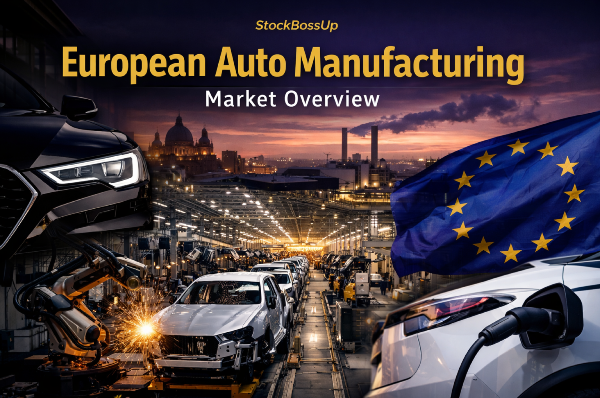
European Auto Manufacturing Market Overview
The auto industry in Europe has long been a global leader in engineering, design, and premium vehicle production. Brands are respected worldwide. Technology is advanced. Quality standards are high.
But there is a growing tension under the surface. Production costs are rising. Regulations are becoming stricter. Competition from Asia and North America is increasing. At the same time, the shift to electric vehicles is forcing deep changes in factories and supply chains.
Many assume Europe will remain dominant because of its history. That assumption may overlook how quickly the global auto landscape is changing.
The real question is simple. Can Europe keep its leadership in auto manufacturing while adapting to faster and cheaper global competitors?
Why Did Europe Become a Global Auto Leader?
Europe’s auto industry grew from strong engineering traditions and early industrial development.
Countries like Germany, France, and Italy built powerful manufacturing bases over decades.
Companies like Volkswagen Group, BMW Group, and Mercedes-Benz Group became global symbols of quality and performance.
Early investment in engineering education and industrial infrastructure helped Europe dominate premium and luxury segments.
This foundation still influences the industry today.
What Makes European Auto Manufacturing Unique?
Europe focuses heavily on precision engineering and product quality.
Vehicles are often built with long lifespans in mind. Safety standards are strict. Design is a major priority.
There is also strong specialization:
- Germany focuses on engineering excellence
- France focuses on efficiency and compact vehicles
- Italy focuses on design and performance
This diversity makes the European market unique.
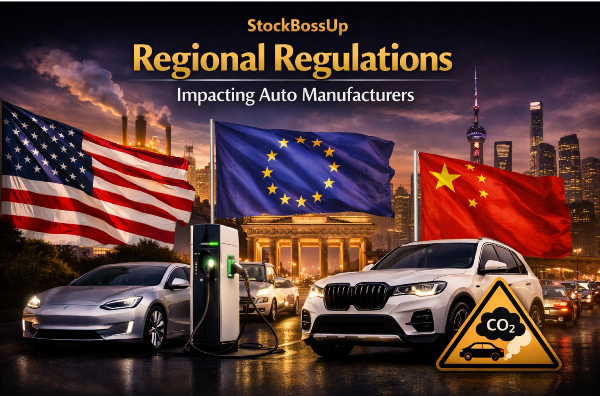
Why Is the European Market So Regulation Heavy?
Europe has some of the strictest automotive regulations in the world.
Environmental rules are especially important. Emissions standards are tight. Safety requirements are detailed.
These rules push companies to innovate, but they also increase production costs.
Manufacturers must invest heavily in compliance and technology.
This creates both pressure and opportunity.
| Factor |
Europe Strength |
Industry Impact |
| Engineering Quality |
Very high |
Strong global reputation |
| Regulations |
Strict |
Higher production cost |
| Brand Value |
Premium |
Strong pricing power |
| Market Diversity |
High |
Broad product range |
How Is Electric Vehicle Transition Reshaping Europe?
Electric vehicles are changing everything in Europe.
The European Union has set aggressive emissions targets. This is pushing automakers toward full electrification.
Companies like Volkswagen Group and BMW Group are investing heavily in EV platforms.
Battery supply is a major focus area. Europe is trying to reduce dependence on imports from Asia.
Charging infrastructure is also expanding quickly across major cities.
Why Are European Automakers Under Pressure?
European manufacturers face strong competition globally.
China is producing EVs at lower cost and faster speed.
The United States is leading in software-driven vehicles and innovation.
European companies must compete on multiple fronts at the same time.
High labor costs add additional pressure.
What Role Does Labor Play in Europe’s Auto Industry?
Labor in Europe is skilled and well-trained.
However, wages are high compared to emerging markets.
Labor unions are strong in many countries, which affects flexibility in production.
Automation is increasing to offset these challenges.
Factories are becoming more digital and robot-driven.
Are Supply Chains Still a Strength?
Europe has a highly developed supply chain network.
Many suppliers are located close to major manufacturing hubs.
This improves efficiency and reduces delays.
However, global disruptions have shown vulnerabilities.
Energy costs and raw material shortages have also impacted production.
| Supply Chain Element |
Strength Level |
Key Benefit |
| Local suppliers |
High |
Faster production |
| Energy supply |
Moderate |
Cost sensitivity |
| Technology |
Advanced |
High efficiency |
| Global sourcing |
High reliance |
Risk exposure |
Why Is Innovation Critical for Survival?
Innovation is central to Europe’s future in auto manufacturing.
Companies are investing in:
- Electric vehicles
- Autonomous driving systems
- Digital dashboards
- Software-defined vehicles
A major shift is happening from mechanical engineering to software-driven cars.
This change is challenging traditional manufacturers.
How Do Government Policies Shape the Industry?
Government policy plays a major role in Europe.
The European Union sets strict environmental rules.
Subsidies support EV adoption. Regulations push emissions reduction.
These policies shape long-term investment decisions.
They also accelerate the shift away from internal combustion engines.
What Are the Biggest Risks Facing Europe?
Europe faces several key risks in auto manufacturing.
High production costs reduce competitiveness.
Dependence on external battery supply chains creates vulnerability.
Slow adaptation to software-focused vehicles is another concern.
Competition from Asia and the United States is increasing rapidly.
How Are European Automakers Responding?
European companies are adapting in several ways.
They are investing heavily in EV platforms.
They are forming partnerships with battery manufacturers.
They are increasing software development capabilities.
Many are also expanding production outside Europe to reduce costs.
Why Do Many People Overestimate Europe’s Stability?
Europe has a strong reputation built over decades.
This leads many to assume it will remain dominant without major changes.
But the industry is evolving quickly.
Cost structures, technology shifts, and global competition are changing the landscape.
Past leadership does not guarantee future dominance.
What Role Do Partnerships Play in Europe?
Partnerships are becoming more important than ever.
Automakers are working with tech companies, battery producers, and software firms.
These collaborations help reduce costs and speed up innovation.
They also help fill technology gaps.
Partnerships are now essential for competitiveness.
| Strategy Type |
Purpose |
Outcome |
| EV investment |
Future growth |
Market transition |
| Partnerships |
Technology access |
Faster innovation |
| Overseas production |
Cost reduction |
Global competitiveness |
| Automation |
Efficiency gains |
Lower labor dependency |
How Fast Is the Industry Changing?
The pace of change in Europe is accelerating.
Electric vehicle adoption is increasing rapidly.
Software is becoming a key part of vehicle design.
Many automakers now produce more vehicles outside Europe than inside for certain models.
Premium brands still dominate global perception, but mass-market segments face increasing pressure from lower-cost competitors.
What Does This Mean for Global Competition?
Europe remains a key player in the global auto industry.
It leads in luxury, safety, and engineering quality.
However, it faces pressure in cost-sensitive and fast-innovation segments.
Global competition is forcing faster change across the entire industry.
Why Is Brand Power Still So Strong?
European brands carry strong global recognition.
They are associated with luxury, performance, and engineering quality.
This allows premium pricing and strong customer loyalty.
Brand reputation remains one of Europe’s strongest advantages.
Where Is the Real Opportunity?
The biggest opportunity lies in electric and software-driven vehicles.
Europe has strong engineering foundations.
If it adapts successfully to software, batteries, and EV platforms, it can maintain leadership in premium markets.
Battery independence and software innovation will be key.
So What Solves the Original Problem?
At the beginning, we asked whether Europe can maintain leadership in a fast-changing auto industry.
The answer depends on adaptation speed.
Europe must balance regulation, cost pressures, and innovation.
It already has strong advantages in engineering and brand value.
The challenge is competing in a faster, more cost-driven global market.
Those who understand this shift will see where Europe still leads. Those who do not may underestimate how quickly the industry is evolving.


Key Takeaways
🚗 Europe remains a global leader in premium auto manufacturing and engineering excellence
The European auto industry, led by brands like Volkswagen Group, BMW Group, and Mercedes-Benz Group, continues to dominate high-end and luxury vehicle segments. Its reputation is built on precision engineering, safety standards, and long-standing global brand trust.
⚡ Electric vehicles are forcing a major transformation across the European auto industry
Strict emissions regulations and EU policy are accelerating the shift toward electric vehicles. Automakers are investing heavily in EV platforms, battery supply chains, and charging infrastructure to meet future demand and regulatory requirements.
⚙️ High costs and global competition are pressuring European automakers
Rising labor costs, strict regulations, and dependency on external battery supply chains are increasing pressure. At the same time, competitors from China and the United States are advancing faster in cost efficiency and software-driven innovation.
🌍 Future competitiveness depends on speed, software, and global adaptation
Europe’s long-term success in auto manufacturing will depend on how quickly it adapts to software-defined vehicles, EV innovation, and global production strategies. Partnerships, automation, and overseas expansion are becoming essential for staying competitive.
European Auto Manufacturing Market Overview
The auto industry in Europe has long been a global leader in engineering, design, and premium vehicle production. Brands are respected worldwide. Technology is advanced. Quality standards are high.
But there is a growing tension under the surface. Production costs are rising. Regulations are becoming stricter. Competition from Asia and North America is increasing. At the same time, the shift to electric vehicles is forcing deep changes in factories and supply chains.
Many assume Europe will remain dominant because of its history. That assumption may overlook how quickly the global auto landscape is changing.
The real question is simple. Can Europe keep its leadership in auto manufacturing while adapting to faster and cheaper global competitors?
Why Did Europe Become a Global Auto Leader?
Europe’s auto industry grew from strong engineering traditions and early industrial development.
Countries like Germany, France, and Italy built powerful manufacturing bases over decades.
Companies like Volkswagen Group, BMW Group, and Mercedes-Benz Group became global symbols of quality and performance.
Early investment in engineering education and industrial infrastructure helped Europe dominate premium and luxury segments.
This foundation still influences the industry today.
What Makes European Auto Manufacturing Unique?
Europe focuses heavily on precision engineering and product quality.
Vehicles are often built with long lifespans in mind. Safety standards are strict. Design is a major priority.
There is also strong specialization:
This diversity makes the European market unique.
Why Is the European Market So Regulation Heavy?
Europe has some of the strictest automotive regulations in the world.
Environmental rules are especially important. Emissions standards are tight. Safety requirements are detailed.
These rules push companies to innovate, but they also increase production costs.
Manufacturers must invest heavily in compliance and technology.
This creates both pressure and opportunity.
How Is Electric Vehicle Transition Reshaping Europe?
Electric vehicles are changing everything in Europe.
The European Union has set aggressive emissions targets. This is pushing automakers toward full electrification.
Companies like Volkswagen Group and BMW Group are investing heavily in EV platforms.
Battery supply is a major focus area. Europe is trying to reduce dependence on imports from Asia.
Charging infrastructure is also expanding quickly across major cities.
Why Are European Automakers Under Pressure?
European manufacturers face strong competition globally.
China is producing EVs at lower cost and faster speed.
The United States is leading in software-driven vehicles and innovation.
European companies must compete on multiple fronts at the same time.
High labor costs add additional pressure.
What Role Does Labor Play in Europe’s Auto Industry?
Labor in Europe is skilled and well-trained.
However, wages are high compared to emerging markets.
Labor unions are strong in many countries, which affects flexibility in production.
Automation is increasing to offset these challenges.
Factories are becoming more digital and robot-driven.
Are Supply Chains Still a Strength?
Europe has a highly developed supply chain network.
Many suppliers are located close to major manufacturing hubs.
This improves efficiency and reduces delays.
However, global disruptions have shown vulnerabilities.
Energy costs and raw material shortages have also impacted production.
Why Is Innovation Critical for Survival?
Innovation is central to Europe’s future in auto manufacturing.
Companies are investing in:
A major shift is happening from mechanical engineering to software-driven cars.
This change is challenging traditional manufacturers.
How Do Government Policies Shape the Industry?
Government policy plays a major role in Europe.
The European Union sets strict environmental rules.
Subsidies support EV adoption. Regulations push emissions reduction.
These policies shape long-term investment decisions.
They also accelerate the shift away from internal combustion engines.
What Are the Biggest Risks Facing Europe?
Europe faces several key risks in auto manufacturing.
High production costs reduce competitiveness.
Dependence on external battery supply chains creates vulnerability.
Slow adaptation to software-focused vehicles is another concern.
Competition from Asia and the United States is increasing rapidly.
How Are European Automakers Responding?
European companies are adapting in several ways.
They are investing heavily in EV platforms.
They are forming partnerships with battery manufacturers.
They are increasing software development capabilities.
Many are also expanding production outside Europe to reduce costs.
Why Do Many People Overestimate Europe’s Stability?
Europe has a strong reputation built over decades.
This leads many to assume it will remain dominant without major changes.
But the industry is evolving quickly.
Cost structures, technology shifts, and global competition are changing the landscape.
Past leadership does not guarantee future dominance.
What Role Do Partnerships Play in Europe?
Partnerships are becoming more important than ever.
Automakers are working with tech companies, battery producers, and software firms.
These collaborations help reduce costs and speed up innovation.
They also help fill technology gaps.
Partnerships are now essential for competitiveness.
How Fast Is the Industry Changing?
The pace of change in Europe is accelerating.
Electric vehicle adoption is increasing rapidly.
Software is becoming a key part of vehicle design.
Many automakers now produce more vehicles outside Europe than inside for certain models.
Premium brands still dominate global perception, but mass-market segments face increasing pressure from lower-cost competitors.
What Does This Mean for Global Competition?
Europe remains a key player in the global auto industry.
It leads in luxury, safety, and engineering quality.
However, it faces pressure in cost-sensitive and fast-innovation segments.
Global competition is forcing faster change across the entire industry.
Why Is Brand Power Still So Strong?
European brands carry strong global recognition.
They are associated with luxury, performance, and engineering quality.
This allows premium pricing and strong customer loyalty.
Brand reputation remains one of Europe’s strongest advantages.
Where Is the Real Opportunity?
The biggest opportunity lies in electric and software-driven vehicles.
Europe has strong engineering foundations.
If it adapts successfully to software, batteries, and EV platforms, it can maintain leadership in premium markets.
Battery independence and software innovation will be key.
So What Solves the Original Problem?
At the beginning, we asked whether Europe can maintain leadership in a fast-changing auto industry.
The answer depends on adaptation speed.
Europe must balance regulation, cost pressures, and innovation.
It already has strong advantages in engineering and brand value.
The challenge is competing in a faster, more cost-driven global market.
Those who understand this shift will see where Europe still leads. Those who do not may underestimate how quickly the industry is evolving.