🚗 Key Takeaways
⚡ Electric vehicles are redefining what car design even means
EV platforms remove traditional engine constraints, allowing flatter floors, longer wheelbases, and more open interiors. This shift enables automakers to prioritize space, efficiency, and futuristic styling over legacy mechanical layouts. It’s one of the biggest design transformations in automotive history and is driving the most radical innovations in the industry today.
🎨 Interior design is now just as important as exterior styling
Modern automotive innovation is increasingly focused on the cabin experience. Large digital displays, ambient lighting, and simplified controls are replacing traditional dashboards. Many manufacturers are designing interiors to feel like living spaces, shifting attention away from exterior appearance and toward comfort, usability, and digital interaction.
🌬️ Aerodynamics quietly shapes almost every modern vehicle design
Efficiency demands—especially in electric vehicles—have made aerodynamics a core design priority. Even small exterior adjustments can significantly impact range and performance. This has led to smoother body shapes, hidden airflow engineering, and subtle but highly optimized vehicle silhouettes across nearly all major brands.
🚀 Concept cars are driving the future of automotive innovation
Concept vehicles act as testing grounds for radical ideas like adaptive materials, autonomous interiors, and modular mobility systems. While not all features reach production, many eventually influence mainstream designs. These experimental models are shaping the direction of next-generation automotive technology and styling.
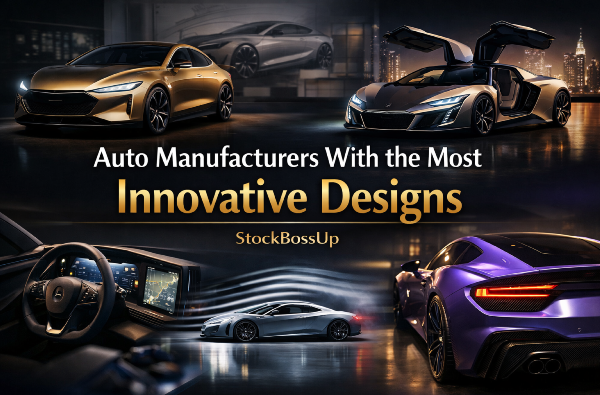
Auto Manufacturers With the Most Innovative Designs
Why do so many modern cars still look the same?
At first glance, most modern cars seem to follow the same design language. Smooth curves, large screens, and similar lighting styles dominate nearly every brand. Even luxury vehicles can start to feel visually similar.
This creates a quiet problem for buyers and enthusiasts. It becomes harder to identify what makes each brand unique just by looking at the car.
Behind this similarity is a complex reality. Automakers must follow safety laws, reduce production costs, and improve aerodynamics all at once. These limits naturally push designs toward safer, more uniform shapes.
Still, some manufacturers are finding ways to break away from this pattern. The difference is not always obvious at first, but it becomes clear in how the car functions, not just how it looks.
What separates innovative car design from ordinary styling?
Innovative car design goes beyond appearance. It blends performance, technology, and user experience into one system.
Some companies focus on aerodynamics to improve efficiency. Others redesign interiors to feel more like living spaces. A few completely rethink how drivers interact with vehicles.
Modern design is also heavily influenced by software. Screens, lighting, and digital controls now define a car’s personality as much as its exterior shape.
Flexibility is another major shift. Many automakers now build cars on platforms that allow future updates and design changes over time.
Why do aerodynamics quietly control modern car design?
Aerodynamics plays a huge role in shaping modern vehicles, especially electric ones. Less air resistance means better efficiency and longer range.
Designers now rely heavily on computer simulations instead of physical models. This allows them to test thousands of shapes before building anything real.
Even small design changes can have major effects on performance. A slight adjustment in mirror shape or roof slope can improve efficiency at highway speeds.
A surprising detail is that tiny improvements in airflow management can increase electric vehicle range more than adding a larger battery in some cases.
| Brand |
Aerodynamic Focus |
Design Style |
Key Innovation |
| Tesla |
EV efficiency focus |
Minimalist exterior |
Smooth underbody airflow |
| Mercedes-Benz |
Luxury + efficiency |
Sculpted elegance |
EQ airflow systems |
| Toyota |
Practical optimization |
Conservative evolution |
Hybrid efficiency shaping |
| Hyundai |
EV-first design |
Sharp geometric styling |
Ioniq aerodynamic form |
How are interiors becoming more important than exteriors?
Today’s car interiors are just as important as exterior design. Drivers spend most of their time inside the vehicle, so comfort and usability matter more than ever.
Large touchscreens, ambient lighting, and voice controls are replacing traditional buttons. This shift creates a cleaner and more digital driving experience.
Some brands are designing interiors that feel more like lounges than cars. Seats are becoming more flexible, and layouts are more open.
A growing trend is “calm design,” where information is reduced instead of increased. The goal is to reduce distraction and improve focus.
Why are electric vehicles changing everything about design?
Electric vehicles remove many traditional design constraints. Without engines and complex transmissions, designers have more freedom.
This leads to flatter floors, longer wheelbases, and more open interiors. Some EVs look completely different from traditional cars.
Manufacturers are now designing EV platforms from scratch instead of adapting older models. This creates more space for creativity.
One unexpected development is experimental body panels that can change color using electronic materials, allowing a car to visually transform without repainting.
| Brand |
EV Strategy |
Interior Focus |
Exterior Style |
| BMW |
Flexible EV platforms |
Curved digital displays |
Experimental surfaces |
| Rivian |
Adventure utility design |
Rugged interiors |
Boxy functional shape |
| Lucid |
Efficiency luxury EV |
Spacious minimalism |
Sleek aerodynamic body |
| Kia |
Rapid EV evolution |
Tech-focused simplicity |
Futuristic styling |
Which auto manufacturers lead in innovative design?
Some manufacturers consistently push boundaries more than others. Their designs often influence the entire industry.
Tesla focuses on simplicity and software integration. Mercedes-Benz blends luxury with advanced digital systems. Hyundai and Kia have rapidly evolved into bold design leaders.
Volvo focuses on safety-driven minimalism, while brands like Ferrari and Lamborghini emphasize emotional and sculptural design.
Each brand defines innovation differently, but all aim to stand out in a crowded market.
| Manufacturer |
Design Philosophy |
Strength |
Signature Feature |
| Tesla |
Minimalist tech |
Software integration |
Screen-centered cabin |
| Mercedes-Benz |
Luxury innovation |
Interior experience |
Hyperscreen display |
| Hyundai |
Fast evolution |
Concept-to-production speed |
Parametric styling |
| BMW |
Driver-focused |
Dynamic design language |
Material experimentation |
| Volvo |
Safety minimalism |
Human-centered design |
Scandinavian simplicity |
| Lamborghini |
Emotional design |
Visual impact |
Sharp aggressive styling |
How do design philosophies differ between regions?
Car design varies by region due to cultural and market differences.
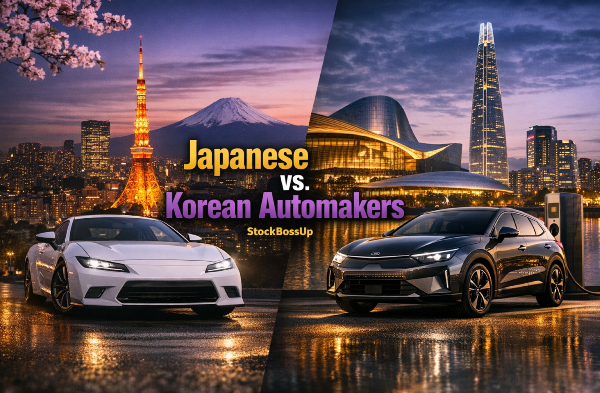
European brands often focus on refinement and heritage. Japanese manufacturers prioritize efficiency and reliability. Korean brands tend to adopt bold design changes quickly.
American automakers are increasingly focused on technology and utility, especially in electric trucks and SUVs.
These differences create a global design ecosystem where ideas spread quickly between countries.
Lighting design is one area where Korean manufacturers have become especially influential, using signature LED patterns to build strong brand identity.
Why are concept cars shaping the future more than production cars?
Concept cars act as experimental platforms for new ideas. They allow designers to test bold concepts without production limits.
Many features seen in concept cars eventually influence real production models. Even if they are not fully adopted, they guide future direction.
Some concepts explore new mobility ideas, interior layouts, and even autonomous driving setups.
These vehicles serve as design laboratories where risk-taking is expected.
| Concept Area |
Purpose |
Future Impact |
Example Direction |
| Mobility expansion |
New use cases |
Utility evolution |
Modular transport |
| Interior flexibility |
New cabin layouts |
Autonomous design |
Lounge-style seating |
| Smart materials |
Adaptive surfaces |
Dynamic exteriors |
Color-changing panels |
| Autonomous systems |
Driverless design |
Cabin reorientation |
Rotating interiors |
Why do some “boring” designs still dominate the market?
Not every car is designed to stand out. Many best-selling models focus on reliability, cost, and familiarity.
Conservative designs reduce risk for manufacturers and make vehicles more appealing to a wider audience.
Bold designs often appear in niche or premium segments, while mainstream cars stay simple.
This balance helps the industry remain stable even as technology evolves quickly.
What will define the next era of automotive design?
The future of car design will focus on adaptability. Cars will no longer be static products but evolving systems.
Software updates will change features over time. Materials may adapt to conditions or user needs. Even exterior design could become dynamic.
Vehicles will increasingly act like platforms rather than fixed machines.
The most innovative manufacturers are already moving in this direction, combining engineering, software, and design into one connected experience.
In the end, innovation will not just be about how a car looks, but how much it can change after you buy it.















🚗 Key Takeaways
⚡ Electric vehicles are redefining what car design even means
EV platforms remove traditional engine constraints, allowing flatter floors, longer wheelbases, and more open interiors. This shift enables automakers to prioritize space, efficiency, and futuristic styling over legacy mechanical layouts. It’s one of the biggest design transformations in automotive history and is driving the most radical innovations in the industry today.
🎨 Interior design is now just as important as exterior styling
Modern automotive innovation is increasingly focused on the cabin experience. Large digital displays, ambient lighting, and simplified controls are replacing traditional dashboards. Many manufacturers are designing interiors to feel like living spaces, shifting attention away from exterior appearance and toward comfort, usability, and digital interaction.
🌬️ Aerodynamics quietly shapes almost every modern vehicle design
Efficiency demands—especially in electric vehicles—have made aerodynamics a core design priority. Even small exterior adjustments can significantly impact range and performance. This has led to smoother body shapes, hidden airflow engineering, and subtle but highly optimized vehicle silhouettes across nearly all major brands.
🚀 Concept cars are driving the future of automotive innovation
Concept vehicles act as testing grounds for radical ideas like adaptive materials, autonomous interiors, and modular mobility systems. While not all features reach production, many eventually influence mainstream designs. These experimental models are shaping the direction of next-generation automotive technology and styling.
Auto Manufacturers With the Most Innovative Designs
Why do so many modern cars still look the same?
At first glance, most modern cars seem to follow the same design language. Smooth curves, large screens, and similar lighting styles dominate nearly every brand. Even luxury vehicles can start to feel visually similar.
This creates a quiet problem for buyers and enthusiasts. It becomes harder to identify what makes each brand unique just by looking at the car.
Behind this similarity is a complex reality. Automakers must follow safety laws, reduce production costs, and improve aerodynamics all at once. These limits naturally push designs toward safer, more uniform shapes.
Still, some manufacturers are finding ways to break away from this pattern. The difference is not always obvious at first, but it becomes clear in how the car functions, not just how it looks.
What separates innovative car design from ordinary styling?
Innovative car design goes beyond appearance. It blends performance, technology, and user experience into one system.
Some companies focus on aerodynamics to improve efficiency. Others redesign interiors to feel more like living spaces. A few completely rethink how drivers interact with vehicles.
Modern design is also heavily influenced by software. Screens, lighting, and digital controls now define a car’s personality as much as its exterior shape.
Flexibility is another major shift. Many automakers now build cars on platforms that allow future updates and design changes over time.
Why do aerodynamics quietly control modern car design?
Aerodynamics plays a huge role in shaping modern vehicles, especially electric ones. Less air resistance means better efficiency and longer range.
Designers now rely heavily on computer simulations instead of physical models. This allows them to test thousands of shapes before building anything real.
Even small design changes can have major effects on performance. A slight adjustment in mirror shape or roof slope can improve efficiency at highway speeds.
A surprising detail is that tiny improvements in airflow management can increase electric vehicle range more than adding a larger battery in some cases.
How are interiors becoming more important than exteriors?
Today’s car interiors are just as important as exterior design. Drivers spend most of their time inside the vehicle, so comfort and usability matter more than ever.
Large touchscreens, ambient lighting, and voice controls are replacing traditional buttons. This shift creates a cleaner and more digital driving experience.
Some brands are designing interiors that feel more like lounges than cars. Seats are becoming more flexible, and layouts are more open.
A growing trend is “calm design,” where information is reduced instead of increased. The goal is to reduce distraction and improve focus.
Why are electric vehicles changing everything about design?
Electric vehicles remove many traditional design constraints. Without engines and complex transmissions, designers have more freedom.
This leads to flatter floors, longer wheelbases, and more open interiors. Some EVs look completely different from traditional cars.
Manufacturers are now designing EV platforms from scratch instead of adapting older models. This creates more space for creativity.
One unexpected development is experimental body panels that can change color using electronic materials, allowing a car to visually transform without repainting.
Which auto manufacturers lead in innovative design?
Some manufacturers consistently push boundaries more than others. Their designs often influence the entire industry.
Tesla focuses on simplicity and software integration. Mercedes-Benz blends luxury with advanced digital systems. Hyundai and Kia have rapidly evolved into bold design leaders.
Volvo focuses on safety-driven minimalism, while brands like Ferrari and Lamborghini emphasize emotional and sculptural design.
Each brand defines innovation differently, but all aim to stand out in a crowded market.
How do design philosophies differ between regions?
Car design varies by region due to cultural and market differences.
European brands often focus on refinement and heritage. Japanese manufacturers prioritize efficiency and reliability. Korean brands tend to adopt bold design changes quickly.
American automakers are increasingly focused on technology and utility, especially in electric trucks and SUVs.
These differences create a global design ecosystem where ideas spread quickly between countries.
Lighting design is one area where Korean manufacturers have become especially influential, using signature LED patterns to build strong brand identity.
Why are concept cars shaping the future more than production cars?
Concept cars act as experimental platforms for new ideas. They allow designers to test bold concepts without production limits.
Many features seen in concept cars eventually influence real production models. Even if they are not fully adopted, they guide future direction.
Some concepts explore new mobility ideas, interior layouts, and even autonomous driving setups.
These vehicles serve as design laboratories where risk-taking is expected.
Why do some “boring” designs still dominate the market?
Not every car is designed to stand out. Many best-selling models focus on reliability, cost, and familiarity.
Conservative designs reduce risk for manufacturers and make vehicles more appealing to a wider audience.
Bold designs often appear in niche or premium segments, while mainstream cars stay simple.
This balance helps the industry remain stable even as technology evolves quickly.
What will define the next era of automotive design?
The future of car design will focus on adaptability. Cars will no longer be static products but evolving systems.
Software updates will change features over time. Materials may adapt to conditions or user needs. Even exterior design could become dynamic.
Vehicles will increasingly act like platforms rather than fixed machines.
The most innovative manufacturers are already moving in this direction, combining engineering, software, and design into one connected experience.
In the end, innovation will not just be about how a car looks, but how much it can change after you buy it.